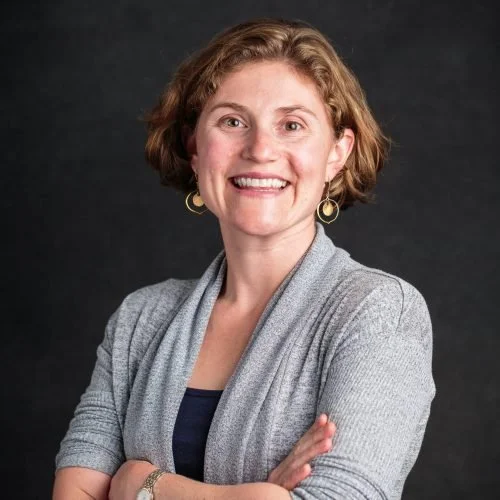
Dr. Amanda Millstein, a pediatrician and activist in California joined me in a conversation about how to best protect our own children – and all children. For both of us, it is personal. After her parents had to evacuate during the terrible fires that ravaged California beginning in 2017, she became ever more aware, not only of climate change, but of the fossil-fuel juggernaut mostly responsible for it. Coincidently, around that time, she began working in a fence-line community not far away in Richmond. After an explosion at the nearby refinery, parents began bringing in their children just to make sure they were okay. She said she felt helpless in the face of such a horrific and, to her, novel risk. “I could offer some real-time reassurance. But this concept of what it means to be okay and over what timespan? I have no idea.” This is an essential question, one that I have seen emerge as a theme in my research: what does it mean to be okay? Dr. Millstein further described the environmental injustices of redlined communities being exposed every day to pollution that is also destroying the climate of the only known livable planet in the universe. Despite the sometimes-grim topics, we enjoyed talking children, books, and hope for the future.
This interview has been lightly edited for length and clarity.
JMK: Good morning! Thanks so much for joining me. I really appreciate you spending the time.
AM: It’s one of those mornings where it's just a mad scramble to get the kids to school, right before this moment.
JMK: I remember. You know, my life has gotten easier. My kids are all grown and college students, but I miss the small-kid days.
AM: That's good to hear. I always appreciate when people say they miss these days because it's fabulous to be reminded.
JMK: But it’s a lot. How old are your children?
AM: Five and almost eight.
JMK: Oh, perfect ages.
AM: It's really fun. It's just – when it's hard, it’s hard.
JMK: For sure. I saw your video with your co-founder of Climate Health Now with Dr. Ashley McClure, and you were saying you chose the right profession since you both love children.
It's really valuable to me that you have that perspective on climate change that you shared in the interview. You said your parents had to flee in the middle of night because of the fires. My parents are in Sacramento but have never had to evacuate. Where are your parents?
AM: They are in Napa. I’m originally from a suburb of New York City. I moved out here for college initially, and they moved out about ten years ago, and they’ve been through several seasons of wildfire, but that was the most significant so far. Having grown up on the East coast, I was intellectually aware of climate change from a fairly young age. In high school, my parents started talking about how our winters seemed less cold and snowy. In retrospect, it seems like a silly thought. But at the time, I thought, I want to move to California. It doesn’t snow there, and it’s already warm. What are a few degrees in California?
Fast forward, for a long time, I had the privilege of not feeling the urgency of either the environmental crisis or the climate crisis – deeply, personally. I had a lot of protection from that. In 2017, things really came to a head in a few different ways. First, my parents: in the span of four days, they were evacuated twice – they were re-evacuated because the wind shifted, and the fire became a threat again. I had a 15-month-old son, and in that same week, I found out I was pregnant with my daughter. We went through a harrowing experience – they knocked on the door at 4 a.m. with bags and their dogs, and my son woke up in the middle of the night. It was very disorienting, not knowing what would happen. We had this really intense week together, and it seemed likely they would lose their house – they didn’t in the end, but there is more to the story.
There was this huge shift in me. I had one tiny child at home and found I was pregnant with another child – the air quality index (AQI) was off the charts – 300-400 for days at a time – we couldn’t go outside. I knew what the impacts could be on my pregnancy. It was the early days of this in my part of California – navigating when it is safe to go outside when there is wildfire smoke. What does it mean for kids, pregnant people, older people? I had this moment of wondering, what world am I bringing these kids into? I still live with that to some extent, but I really grappled with that for about a year and a half – intense feelings of uncertainty and anxiety – and I wasn’t doing anything with them. I was just dwelling with them.
It seemed very random at the time, but right around that time, I took a new position as a primary care pediatrician in Richmond – just one city over from where I live. The Chevron refinery is in Richmond – less than a half mile from one of the major elementary schools.
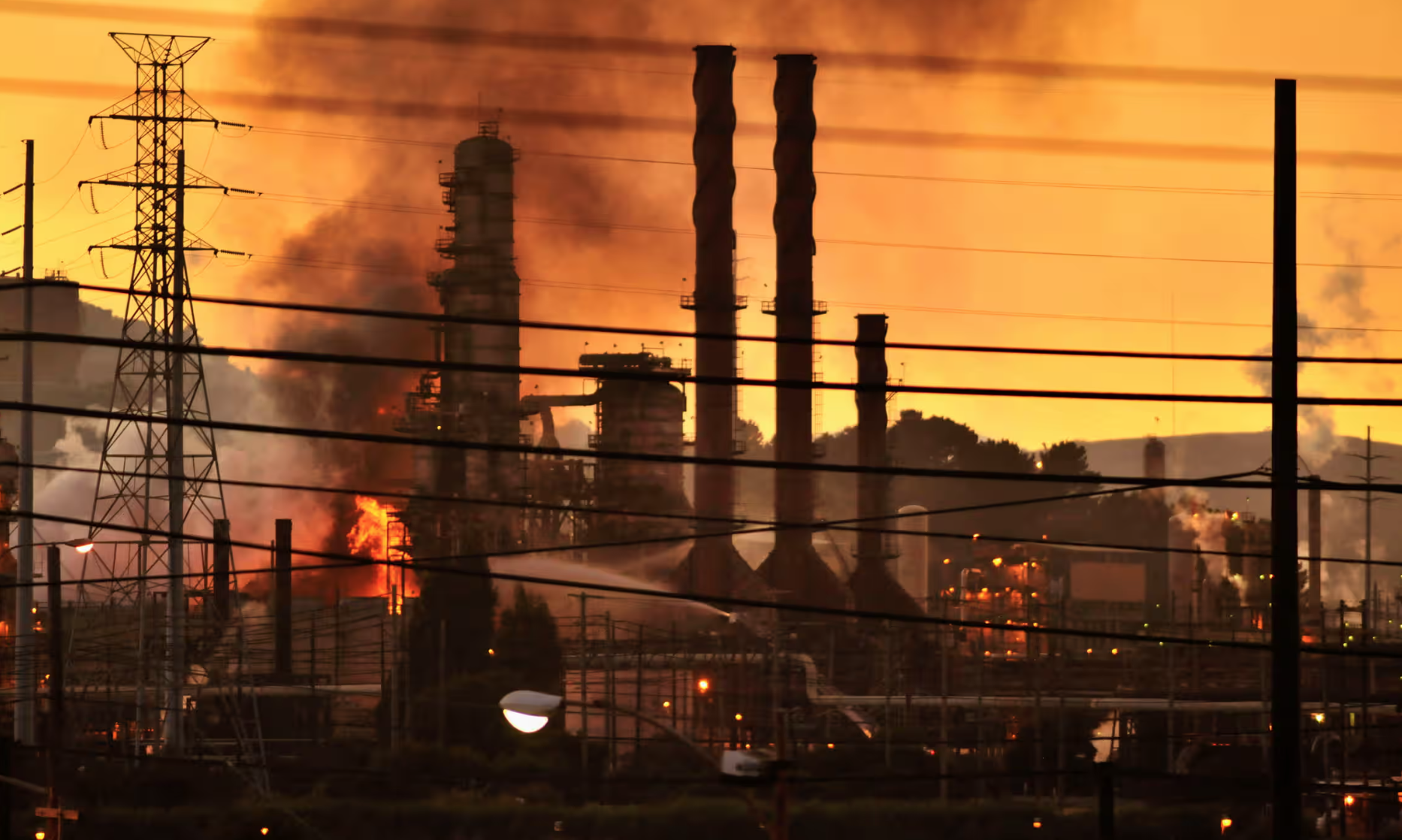
Figure 1: The Chevron Refinery in Richmond (The Guardian).
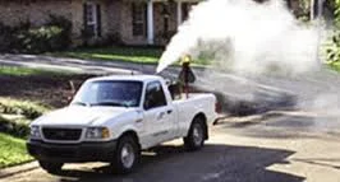
On a clear day – the irony being we’re not often having clear days – I could actually see the refinery smokestacks from my exam window. One of the first things that happened when I started working there was an explosion, not at Chevron, but at another refinery in Martinez, one city over. All of a sudden, our phones had NIXLE alerts – a community warning system saying that there is a shelter-in-place order for that part of Richmond. We could see this black stuff in the sky, and I had never experienced anything like this. This was an explosion at the NuStar refinery. And within the span of 24-48 hours, I watched my schedule fill up with families who just wanted to have their children checked out. Many of them had a history of asthma, though some didn’t. Every parent or grandparent to a person came in and said, we were close by the explosion – we just want to make sure our child is okay.
I felt so futile. Sure, your child is not wheezing – she looks healthy – I could offer some real-time reassurance. But this concept of what it means to be okay and over what timespan? I have no idea. This is not the first explosion – the kids and families have been living there for decades. What are the long-term implications of all this? To some extent, we don’t really know.
That was when things really started to connect for me. I was feeling so afraid about climate change and what it would mean for my children, my parents who are retired here, and then seeing the impacts of fossil-fuel pollution that has been existent as long as we have had fossil fuels and the families and kids who are most impacted completely getting the short end of the stick through no fault of their own. There’s systemic racism, redlining, all of the structural factors that go into influencing who lives close to fossil-fuel infrastructure. I had heard a little about this, but I really started to see it in real time. I realized that we need to get off fossil fuels so we can halt climate change and so we could implement much stricter pollution control in the short term to help my patients. Chevron is the largest greatest source of PM2.5 in the Bay Area. And if we can stop some of that, these kids will be healthier almost immediately. PM2.5 has a very short half-life. This could help now – and we need to do it so our kids have a livable planet.
So that’s my story.
JMK: Wow – what a confluence of events for you!
AM: Now that I think back on it, it certainly felt like that kind of moment after which I can't ever go back to my worldview before. Once you see something – you can’t unsee it. It felt like that.
JMK: I suppose ignorance is bliss in some ways, but we have a responsibility.
AM: I could not agree more.
JMK: You've done a lot. You've organized Climate Health Now!
What are some of the most important findings in your field that you have seen, or that you've done, that affected the way you see your work in the world? Is there something that was really pivotal?
AM: I don’t think we have achieved it yet, but what feels pivotal is the idea that health is political –
regardless of what we think. I have heard it said that only 10% of health is influenced by what happens in an exam room, and 90% is outside it. For all of us involved in health in some way, our lane is much wider than we think and are taught to believe. I’m a pediatrician, so I can say that pediatricians have more of a tendency toward advocacy because we are inherently advocates for the future because we are taking care of kids. These kids are going to grow up, and what is going to happen? How are we making sure they have the potential that we want them to have? How do we really create a movement in healthcare where we are looking at this as our collective lane, which has become political. But everything is political. And this is about health as much as vaccines are about health – or child development. They are all important and all are part of our lane. Does that make sense?
JMK: Yes, absolutely, and that has been a discussion during the pandemic. People like Dr. Fauci are told to stay in their lane!
AM: Oh, people are told that all the time.
I talked to a pediatrician recently who does a lot of gun-control advocacy and had exactly those words lobbed at her – this isn’t your lane. But if you are a doctor or nurse, and you take care of someone who has been shot, that is very much your lane.
JMK: Yes. It’s ridiculous. The CDC has been kept from putting gun violence on their website, yet it is very much a public health crisis.
So the next question happens to be a follow-up on what you've already said, which is that there is so much fear and anxiety about climate change and the kind of environmental contamination that you witnessed with Chevron. How do you frame that conversation with parents? And you've already touched on this a little bit. It's important for prevention to bring these issues up, and yet it's productive of anxiety.
AM: That’s such a good question. I am very much still learning. I don’t think there is one right way to go about it. But the road that I don’t ever want to go down is saying that it’s your fault, that you shouldn’t live so close to X, Y, or Z polluting source because that is not at all their choosing – not for the vast majority of people. If you asked a family, do you want to live so close to this refinery, where you can see what it is spewing out? No one will say yes, sign me up. I think it’s important to acknowledge and accept that so much of this is systems-level forces.
A lot of this is trying to meet families where they are during the patient encounter and trying to understand what their concerns are. I had a family who were dealing with residue in their windows from some sort of process related to refining. That is hugely concerning. That is one extreme. Who do you talk to right now? Who is going to be able to figure out what this is and what the implications are? It was all hands on deck.
I talk to teenagers, kids, and parents about climate anxiety writ large – uncertainty in what is to come. One thing I have found helpful is to identify the helpers – groups and people who are working to change things – and to help form connections there.
I had a teenage patient who went to a high school in Richmond that had a climate action group, and we figured out how she could join. Richmond is an awesome example of a place that has so much community activism and advocacy around a lot of topics, especially the fossil-fuel industry. I think one of the most important things is to find a group – don’t go it alone. It’s hard to know – I lived with this a long time. Who is going to be my group? There are so many ways to engage with this from the menu of options.
Another thing I am struggling with is not cherry-coating things. We have to admit that things are pretty bad, that we have done a lot of damage. But there is a lot of reason to have hope and to make every effort we can to right the ship in a way that is going to make people healthier, in a way that is more equitable. We have to hold both of those things as true. “Everything is great” is not true. And also, we have to try in whatever way is right for us, which is going to look different for everybody.
JMK: You were talking about parents wondering if they move. I think it was Lisa Patel who referred me to you. When she and I were talking, she was saying the same thing with her young children. Will she have regrets just staying in California with the terrible air quality? I can see how you can really feel for these parents, because while you don't have their air quality from the refinery, certainly you have impacts. I mean my goodness! Here in the Midwest, we had bad air quality days from the smoke of burning forests in Canada.
AM: Yes. I still have family in New York, and since that’s where I am from, that always grabs my attention. The pictures of New York looked like the Bay Area from a few years ago. It’s wild.
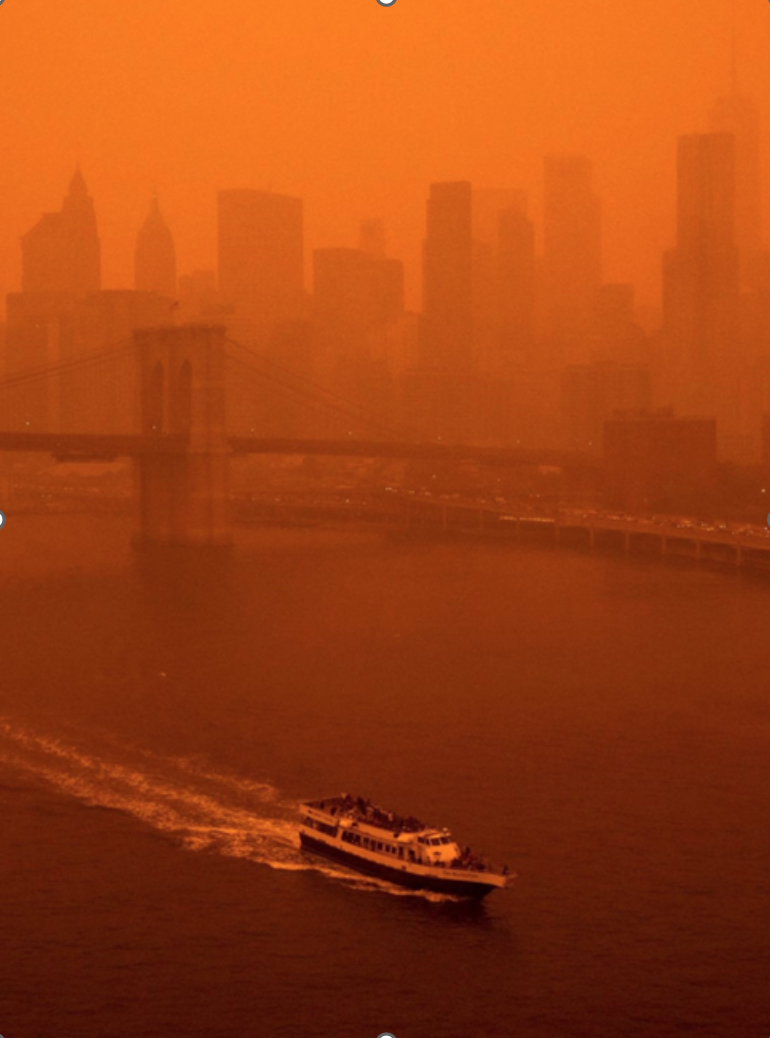
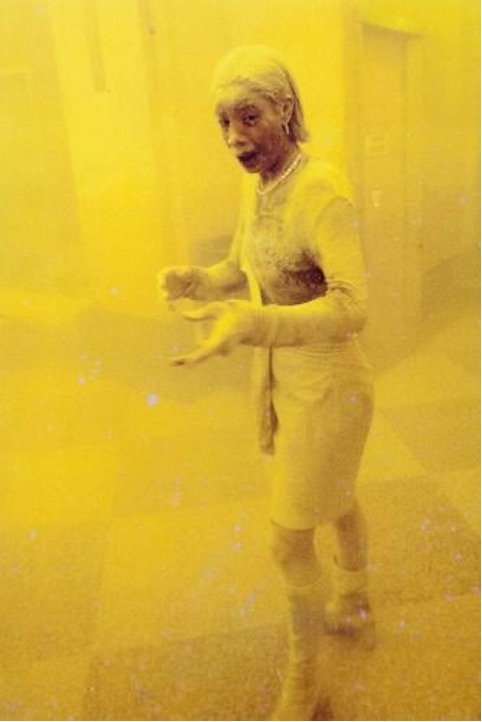
Figure 2: New York City in 2023 (Palley, National ).
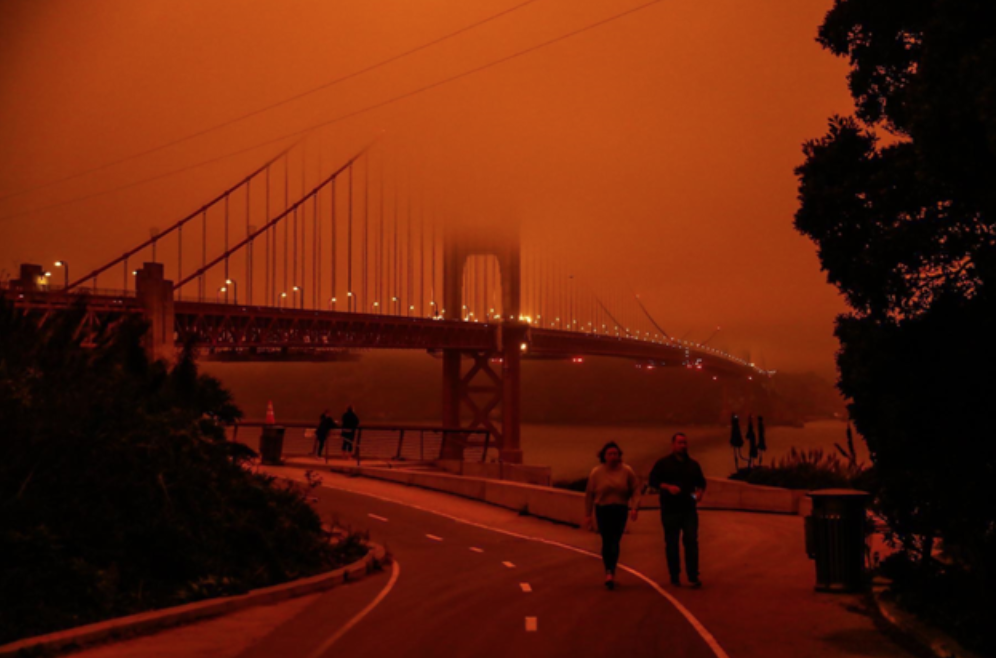
Figure 3: The Golden Gate Bridge in 2020 (Nolte, San Francisco Chronicle).
JMK: It was crazy when we first saw those pictures of the Golden Gate Bridge and the orange sky.
AM: That was a hard day. My kids were both in preschool, and my daughter must have been two and a half. She sobbed. She thought we were taking her to school at night, and she just didn’t understand it. Things just felt so wrong. Is this the new world that our kids are facing? That was a very hard day.
JMK: We've known it's been coming. And yet, even if it is predicted, it still feels different when it happens.
So the next question is about policy, and I don't know how much your organization has looked at policy. But if you suddenly had the power to single handily recreate U.S. policy regulating fossil fuels and pollution and addressing climate change, what would you do? And what do you think is the way forward?
AM: That’s a big question. So one thing comes up top-of-mind is not simply about climate change – it’s about the future in general. We have to prioritize our kids in all policy. We have to listen to what our kids are telling us. We have to invest in their future. And right now, we are not doing that. We are gutting our Public School systems where we live in California – we’ve been doing that for decades. There are other states in even worse positions than we are.
And the same lens clarifies other issues. As a pediatrician, I am biased towards this. I have yet to meet a parent or caregiver who doesn’t want a good future for their child. I have yet to meet someone who doesn’t care what happens to their child – whether it’s their foster child, biologic child, grandchild, whatever child they are responsible for – who doesn’t want something good for them. If we use that lens, things become so much clearer in terms of our priorities. We need to get off fossil fuels because for our kids, it’s going to significantly worsen the future – every tenth of a degree warmer will make things materially worse.
That same lens can be applied to other things too. Structural racism hurts all kids, not just kids of color. It hurts white kids too. What do we want for our kids? That’s the policy lens that we should apply across the board – to achieve a healthier, more equitable future for our kids.
I am probably not going to get elected on that, but that is what it comes down to for me.
JMK: I don’t know – you might get elected on that.
AM: When we talk about things like the economy – I get that – jobs are a social determinant of health. I get that those things impact child health as well. And we have to be thinking of the future, longer-term. We know we can transition off fossil fuels in so many areas that we haven’t now. And doing that will make people healthier now, and it will make us healthier in the future.
JMK: One of the people I interviewed – Dr. Susan Buchanan – is head of the PEHSU in the Midwest. She is my mentor for the MPH. I just met and talked with her, and she got into local politics because when Trump was elected, she was just so angry and wanted to do something. She went to the Women’s March and said she would run for office. She was elected and has done some good things.
AM: My mom was in local politics for much of my childhood. It’s hard – I know from being her child – but it’s so important.
JMK: I’m on the local Environmental Advisory Committee, which is not an elected position, which takes a lot of the pressure off. But it’s surprising the real difference you can make when there are only so many people to work with.
AM: I totally believe it.
JMK: So maybe someday. I would vote for you with that platform.
So this next question is really the one that I am centrally interested in, both in my previous book, and in the next very different book. If we know we are destroying the climate on which all life depends and that we are poisoning our children and that there are solutions ready at hand, but we're not employing them, why is that? Earnestly, simply, how could we be this stupid?
AM: That’s a hard question too. I think there are a lot of answers to that – it doesn’t come down to one thing. One thing is that it’s very hard to deviate from the status quo, and that seems embedded in us as humans. The status quo seems known and safe, and it may not be working, but at least we know what it is. Change is scary and hard and unknown. A lot of the rhetoric around the change that we need with climate change involves giving things up. People have a fear of what they may have to give up. And they don’t see what they are going to get in return. We haven’t done a good job of actually envisioning the future that we want and talking about it. I think people hear things like I’m not going to be able to eat red meat or drive my car. Or I will have to switch my stove out. That’s all seemingly sacrifice. We don’t talk about what it could look like and what we collectively want.
A lot of this is human nature – to want to maintain what is. It’s important to think about the future and apply this different lens. What are our children and grandchildren inheriting from us? That is a big part of this.
The other really sad part of this is the misinformation and disinformation that is out there. Climate change has become such a cultural flashpoint. I was just on the phone with someone talking about a community where there is a plan for siting new solar panels. The fear that people have is so specific and also so rooted in disinformation – like wind turbines cause cancer – solar panels cause autism. These are completely untrue, and I’m hesitant to even mention them. I’m so cognizant that someone could assign my name to this.
It’s important for the healthcare community to take this on as ours. In our communities, we are trusted messengers. People routinely rate their doctors, nurses, pharmacists, and other healthcare practitioners as among the most trusted messengers in their lives. There are real forces acting against this change – and they have a lot more money than we’re ever going to have. This is something we have – the ability to really talk to people about is actually going on and what this means for their health. Another piece of this, unfortunately, is that this misinformation and disinformation that people are susceptible to is very hard to fight. It’s very real.
JMK: I completely agree, of course. Also, the fragmentation of our media and social media and the loss of trusted news sources is very distressing.
The next question is asking you to forecast a little bit. What do you think will be the status of children's health in 2050?
AM: I have no idea. I don’t think that I would be able to put my nickel down. I can tell you what I hope, which is that we care a lot more as a society about what is going on with child health and that we again are applying this lens to things like cumulative impacts. I hope we would have a good understanding of what it means to have been in utero and grown up next to a refinery – or an oil or gas well, or a highway. We still can’t quantify what the cumulative impacts of these sources of pollution are.
I think we need to understand that so we can target our interventions to the people and children who are most impacted.
I hope that we will have transitioned off fossil fuels in an equitable way. We can’t have sacrifice zone – Richmond, where I practice, is a sacrifice zone. There are huge sources of pollution, and there has been redlining for decades. My hope for 2050 is that we don’t have sacrifice zones and that we recognize where our policy interventions are most necessary for those most impacted. I hope that we have moved to healthier sources of energy in those communities so that they are reaping the health benefits.
JMK: I could not agree more. Of course, we have sacrifice zones around here too. Do people call it a sacrifice zone openly?
AM: I don’t know. I can’t speak for the people of Richmond. But I think that term would resonate. I don’t think people would push back on it.
JMK: I am acquainted with an activist in the Gary area, which pretty clearly is a sacrifice zone. I don’t think many people in the fossil-fuel industry would get caught saying that – except maybe behind closed doors.
I know that you have HIPAA and cannot share any of your patient identities with me. But if you know anyone who is a parent activist in your area and especially in Richmond, I'm looking for parents, and I would love to talk to some of them.
AM: What I would suggest – I can send you names of groups in Richmond who do amazing organization around fossil fuels and education equity. I think you could reach out to leaders of those groups. One is Richmond Our Power Coalition; another is Communities for a Better Environment (CBE) – they are across California, but they have a big organizing hub in Richmond.
JMK: That’s awesome! I also am talking to Leticia Nogueira, She's in Texas at the American Cancer Society, but she did fence-line work with some of the refineries in Texas, and so I think, especially for the chapter on climate change, it is important to talk about the other, more direct and immediate impacts of the fossil-fuel industry.
AM: I think that helping people to understand that linkage is so important – that this is about fossil fuels that are making us sick now and in the future – and they are especially making our kids sick. How do we connect those dots?
Plastics is another huge issue, right? Those are byproducts that are also related to the fossil-fuel industry. And that's another source of huge profits for the fossil fuel industry . It’s so much to hold in your head, yet it’s all related.
JMK: Absolutely. Ironically, my former husband works for BP and still works for the fossil-fuel industry. And at times, he would work building oil refineries, and then, at other times, he would just switch to plastics. Beyond Plastics has done a great job lately of showing the climate impact of plastics. And of course, we're all seeing the damage done by microplastics – and they are now found in breastmilk and placentas – and now arterial plaques implicated in heart disease. I mean, what are we doing?
AM: I know. It's so complicated and yet so simple at the same. It's so obvious what we need to do.
Have you heard of Shannon Brescher Shea? She wrote Growing Sustainable Together – about how to talk to kids about the climate crisis. She is about my age and had kids around the same time I had. This is reflective of privilege and income – the sense of surviving the incredible challenges of being a working parent with young kids. As you know, our childcare system is broken, and everything is plastic, and Amazon will ship it to you in twelve hours. We have this incredible feeling of guilt – this sort of double-bind. You can’t possibly win because you are causing all sorts of damage by buying these products and supporting them. And also, day-to-day life working full-time is very hard. I thought she laid things out in a really thoughtful way. If you are looking for suggestions….
JMK: I definitely am – particularly for my chapter on eco-anxiety and mental health.
AM: I just recently connected with a woman whose name is Talitha Aho. She is a chaplain at the Children’s Hospital where I work, and she just wrote a book called In Deep Waters – Spiritual Care for Young People in a Climate Crisis. It’s a reflection on what she learned working with teenagers – how they think about climate change. I could connect you if you wanted.
JMK: I would love that – thank you! Many of my students have really significant climate anxiety – and I’m sure it’s worse in California.
AM: My own thinking about climate anxiety -- which I definitely feel and have felt – is that it’s hard to nail down – what is it, why am I feeling it? It’s complicated, and it gets back to the tension between not sugar-coating the truth, but also not giving up.
JMK: I have a list of things I tell my students. I tell them about active hope, which is a concept from Liz Cunningham in Ocean Country who got if from Joanna Macy. There's tragic optimism and solastalgia. We're only just beginning to be able to put a name to some of these feelings. As you said, it's hard to pin down in some ways how people feel about this.
AM: When you root it in historical context – there are people for whom an existential fear of the future has been all they have ever known. And then for people like me, this is a relatively new feeling.
Climate Momma is another person who could be helpful for you. Harriet Shugarman is in New York City and has been doing parent organizing around climate for a long time; she has built an international network.
JMK: Thank you. My last question is, is there anything you would like to ask about the project or about my own experiences?
AM: I don’t know how comfortable you are sharing your story, but I would love to know what got you here.
JMK: I tell the story all the time. My daughter Katherine got leukemia that we have every reason to believe was caused by exposure to chlorpyrifos. We did not realize it at the time, but they were spraying for mosquitoes. We had our windows open for the fresh air. And sadly, we only put the pieces together after her first bone marrow transplant. We were all acutely ill from these exposures. I lost thyroid function. My son has learning disabilities, and she developed leukemia and died when she was eight.
While she was alive, we were active to the extent that we were trying to get our city to stop spraying for mosquitoes, and she even went with me, and we would go door to door sharing information. And we did get that done. And then after she died, I just felt that I could not let this stand. Even while she was alive, I sent out information to every municipality in my county. The spraying company threatened to sue me for libel and slander. I thought okay, but this is not over, and so that was one of the reasons I got my Masters in Public Health at the university where I teach a course or two at a time. I learned so much, and I just kept expanding. So now, in the twenty years since she died, my research is keyed in on environmental topics, and my teaching has also shifted to environmental topics – Environmental Literature and Global Environmental Health. And then I became involved with APHA’s Children’s Environmental Health committee, and they nominated me for the CHPAC, which has been a tremendous experience.
AM: I don’t know how I would…. I have a son who is almost eight – I can’t even talk about it, but that’s amazing. Thank you.
JMK: Well, thank you. Many parents do have true sympathy because once you have children, you realize what they are to you. I didn't realize until I had her. Then you realize they're everything. And you realize what you have done to yourself.
AM: Why can’t that be our lens? That's such a core human feeling – wanting something better for our kids – and this recognition that what happens to your kid also happens to my kid, rather than this sense that I'm just going to wall my kids off and protect them. And I fear, honestly, that's entirely the direction that we're going – people thinking they are going to build a tighter and tighter fortress around their kids or their small little community, and not see that we are all connected. Look at the air, right? What happens to any of us happens to all of us.
JMK: So true. I really hope that with the air pollution we're enduring, people see this, that you cannot isolate yourself. You cannot protect your children in isolation.
This is something I talked about in the last book. One of my favorite new reads is Robin Wall Kimmerer, Braiding Sweetgrass, and she says, “All flourishing is mutual.” She is talking about plant communities and human communities and all the above.
AM: I have had that on my bedside table forever, and for whatever reason, haven’t been able to get into it. But maybe this is my moment. Have you read All We Can Save?
JMK: That’s on my reading list! I think you are the third friend who has recommended it to me.
AM: I would really recommend that. And there are people in there who you could connect with, such a rich variety of authors, all women, almost all rooted in love for children. I give that book to anyone whenever I need a gift idea because it’s so profound and beautiful.
JMK: It’s a great idea, focusing on what we can save. Liz Cunningham in Ocean Country talks about the passion for rescue – and if everyone is trying to rescue one thing – the ecosystems that we can – we might succeed. I think that is the right perspective. We need more fiction that imagines this future. We need to think about and describe all the co-benefits of saving the climate.
AM: I totally agree. And I have had a hard time getting into climate fiction, for a variety of reasons. I found The Ministry for the Future a little difficult.
JMK: Yes – I read that recently and found it thought-provoking but a little dry.
AM: I tried to read The Deluge, but I couldn’t make it very far, though some people really enjoyed it. It’s fiction but very much rooted in reality. I found it a little too much on the nose.
One of the women I was talking about, Ayana Elizabeth Johnson, was one of the editors of All We Can Save. She lives in New York City, and I just saw on Instagram that she was involved in some sort of play about climate futurism at the Headland Center for the Arts.
She’s writing a book called What if We Get It Right?
JMK: I love that title! There was a 1970s book called Ecotopia that I would love to redo for our time. We have already lost so much, and much is locked in. But to imagine, yes, what if we get it right? William MacAskill in What We Owe the Future, argues that we should imagine that life could be as much better in the future as now is compared to the eighteenth century. We need to do the work of imagining another quantum shift.
AM: That’s true, and it’s funny. My five-year-old has been really obsessed with dolls, and she can’t wrap her mind around the fact that my mom was saying they didn’t have many dolls when she was her age – that they were all very delicate. In her great-grandmother’s time, dolls were made of porcelain or glass, so very few people had them, and you could break them, even while changing their clothes. My daughter couldn’t grasp the idea that things are better for her than for her great-grandmother. It’s been interesting to see her try to grapple with this idea that they didn’t have what we have now, and how lucky we are. She is feeling that things are better for her now than, by her world view, they were for her great-grandmother. So it’s sort of similar to this idea of, what could it be like?
JMK: Yes – that’s interesting! Well, thank you so much for this conversation – it’s been delightful.
AM: Please let me know if you want any specific connections to anybody. I’m totally happy to do that.
JMK: And I will run the blog by you, probably in a few weeks, and of course, anything else I publish. Thank you so much! It was lovely to talk with you!