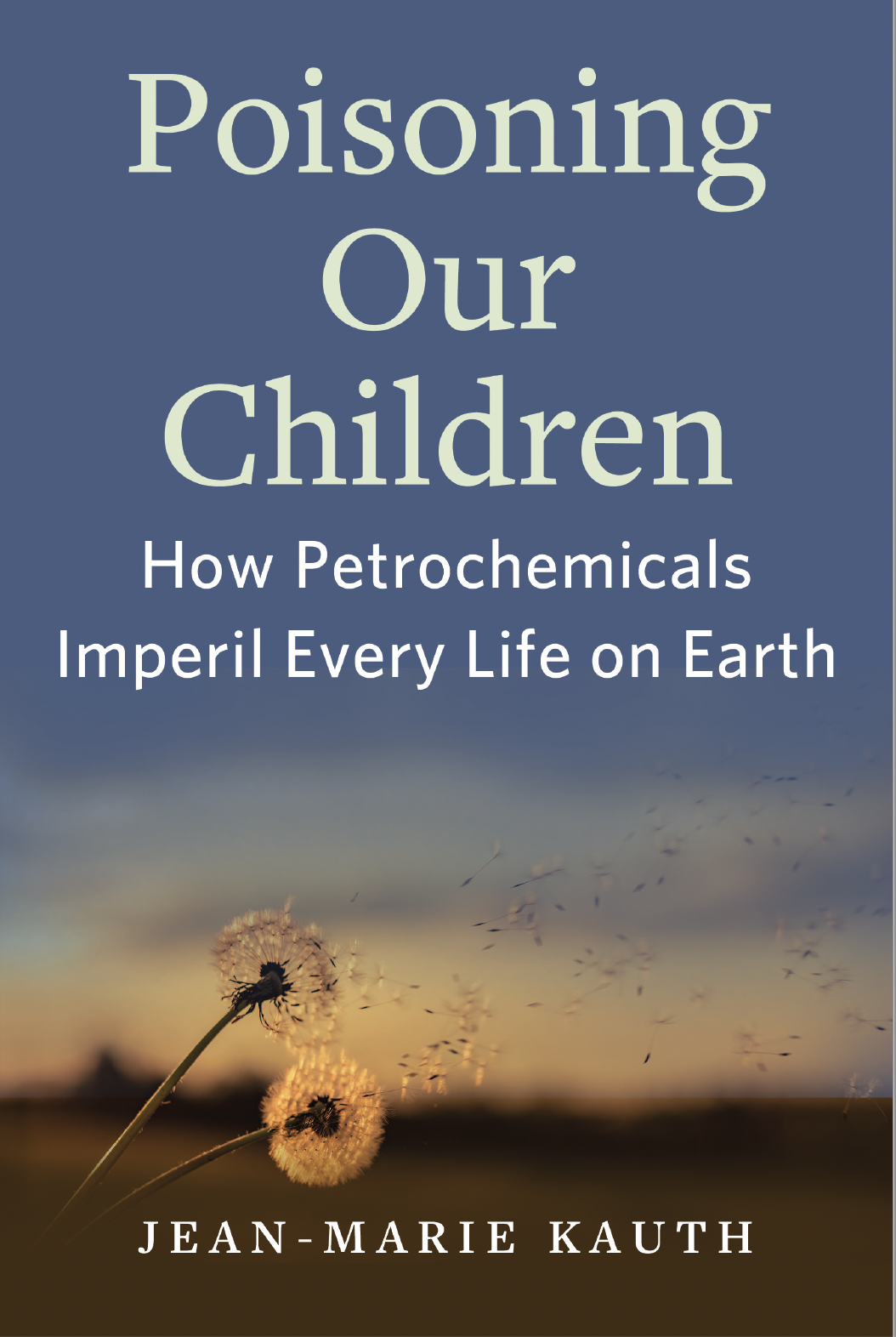
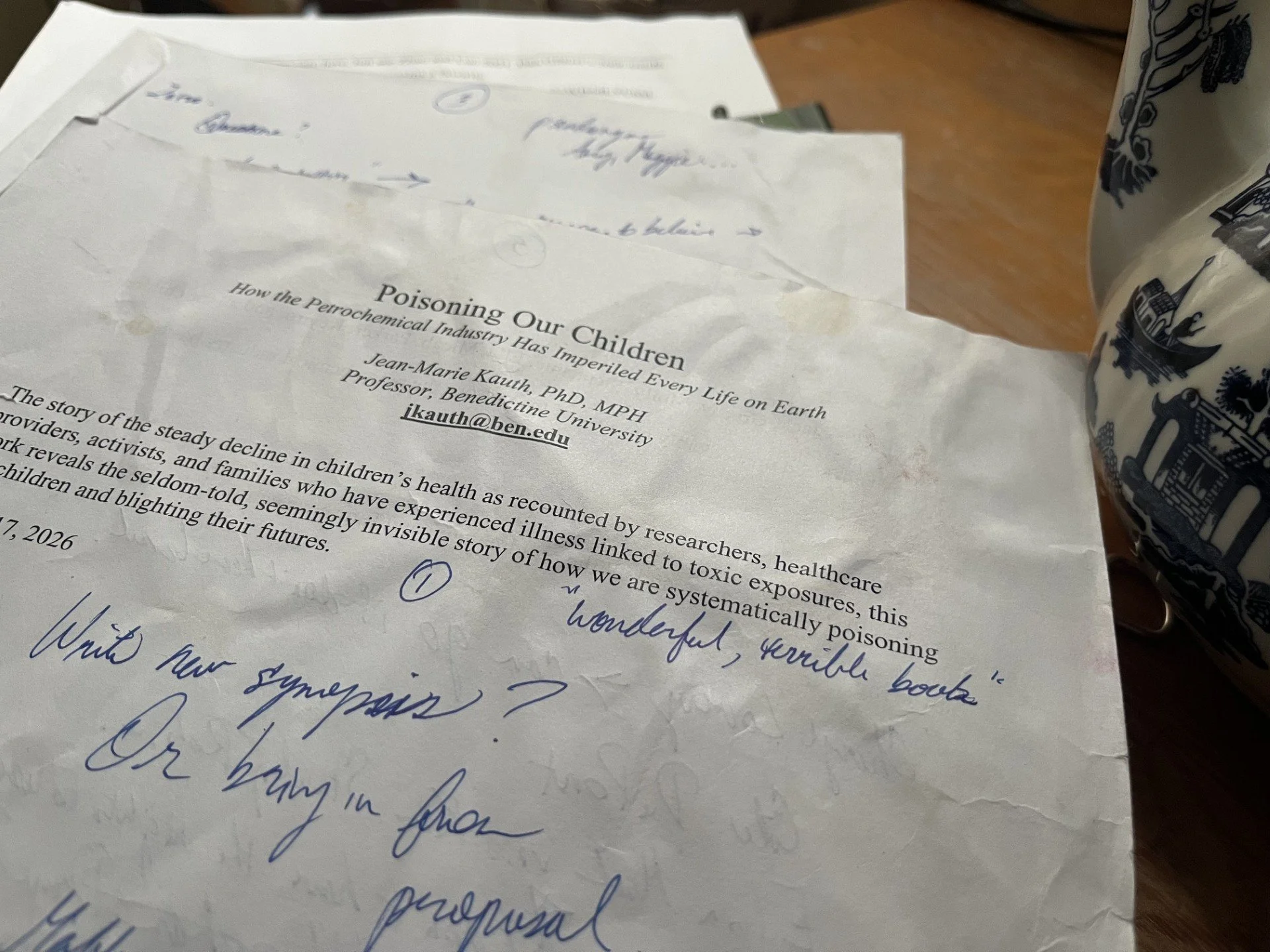
A week ago, I received the long-awaited review of my upcoming book, Poisoning Our Children, under development with Johns Hopkins University Press.

Overall, this review is everything I had hoped for – both enthusiasm for the project and good advice to improve and polish the finished product.
I have reframed the overall argument in the last chapter to address some of the reader’s valid concerns – that I had tried to maintain too chirpy a tone about the bright side of solutions, given the horrifying way big money is diverting our political systems from actually adopting the lifesaving, world-saving transition away from toxic chemicals and toward renewable energies. I have also made some substantial cuts. Some of the cut material will be better suited to my next project anyway – I tend to pack too many ideas into one piece. And the reader’s comment that I couldn’t stop writing my conclusion? I feel so seen! It reminds me of the end of the ninth-century Handbook for William, a moving advice manual Carolingian mother Dhuoda wrote for her son William – held hostage to political machinations far away. Her book was the one way she could reach out to her son, communicate herself across the impassable miles from her hand to his. She follows conclusion with epilogue with afterward, hesitant to cut off even this tenuous connection with her child. Same.
This project was a long time coming to fruition. I began the research in scientific databases not long after Katherine was diagnosed in 1998. That thirst for answers intensified after her death in 2002. In 2012, I drafted the introduction and first chapter of this book, during my only sabbatical from Benedictine, and I completed the Masters in Public Health 2012-2018 to gain the right credentials. I worked hard to find a place for the book proposal, but after being told that the project was too grim, too interdisciplinary, too daring in the face of industry opposition, I put the project on hold and worked on what became my first monograph, Environmental Legacies of the Copernican Universe in 2023.
Why did it take years, decades to find a home for this project? I am so grateful to Senior Acquisitions Editor Robin Coleman at JHUP for seeing its potential. I believe that in some ways, the audience for it needed to grow. Then, people were largely still in denial. Now, as the ravages of environmentally-caused disease and climate-change disasters become patently obvious, more people may be receptive to an unflinching gaze at the horrors we have wrought – on everyone, but especially on our children. I hope so. I hope everyone reads this book and shares it with a friend. It is vulnerable, laying bare the misery of losing my brilliant, beautiful first-born child to easily preventable illness – preventable, that is, if others hadn’t poisoned us.
Some might find it surprising that I would willingly lay out the suffering my family has endured. But if it would change the way the virtually unregulated effluence of the petrochemical industry is killing every organism on Earth, including those most dear to us, I would plaster pictures of Katherine dead on every billboard in town. And I think she would agree with me. Just like Emmett Till’s mother Mamie Till-Mobley, I want those who did this to my baby to have to see what they have done, to hear about the beautiful soul they tortured and destroyed. Just like Gisèle Pelicot, who said the shame of being drugged and raped repeatedly belongs to her husband, and not to her, those suffering the effects of this vast poisoning should say, the shame belongs not to us, but to the petrochemical industry – and the politicians and regulators who have failed to protect us from their depredations.