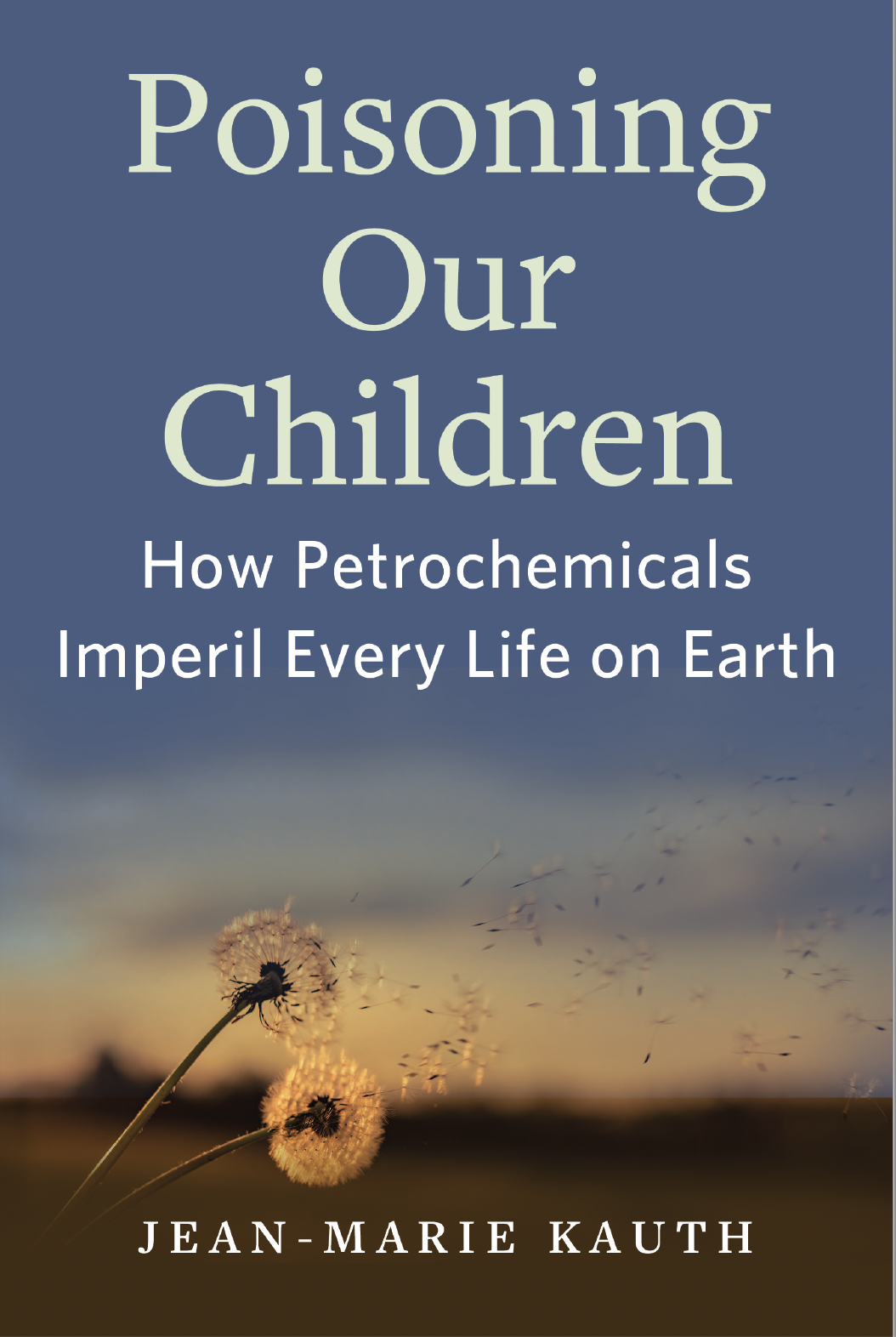
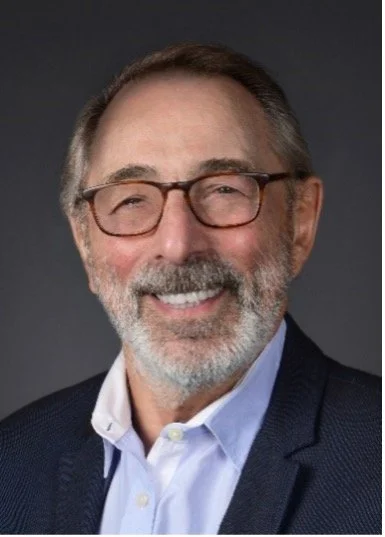
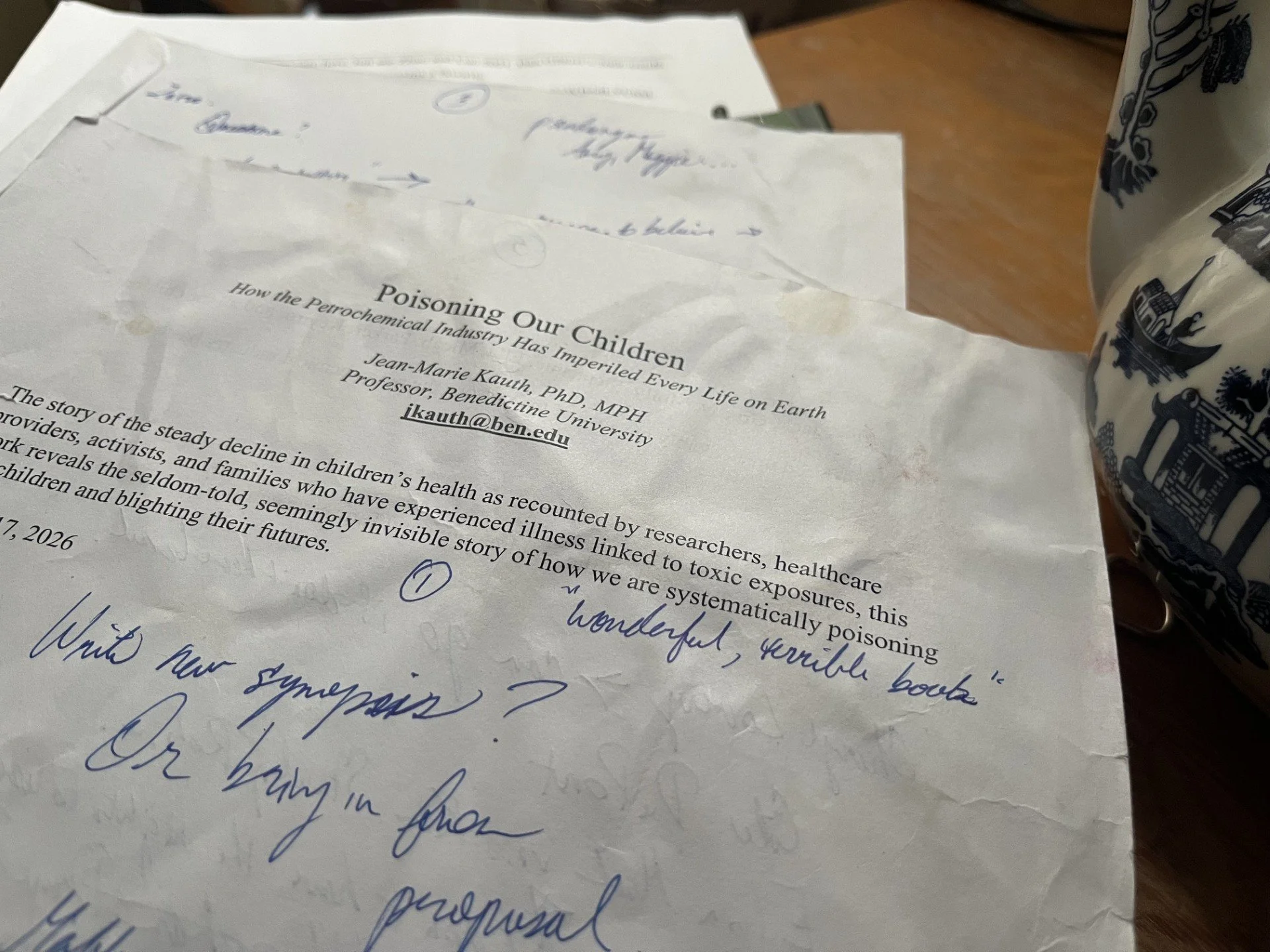
As I finished Poisoning Our Children for JHUP, one comment from the reviewer was to cut down the final chapter on solutions: it was trying to do too much, to pursue too many tangents. I agreed and cut a great deal. I realized I was trying to write my next book, provisionally titled Closing the Circle, parthenogenically born out of this one like Athena out of the head of Zeus. There was so much material that the last book would not contain it -- this thought-provoking interview with Dr. Leslie Rubin, just for starters. While I have been writing about closing the broken circles of the Copernican Universe, Dr. Rubin has been thinking about how to break the cycle of poverty, environmental contamination, and poor health. So whether this is an epilogue to this book or a prologue to the next one, read on....
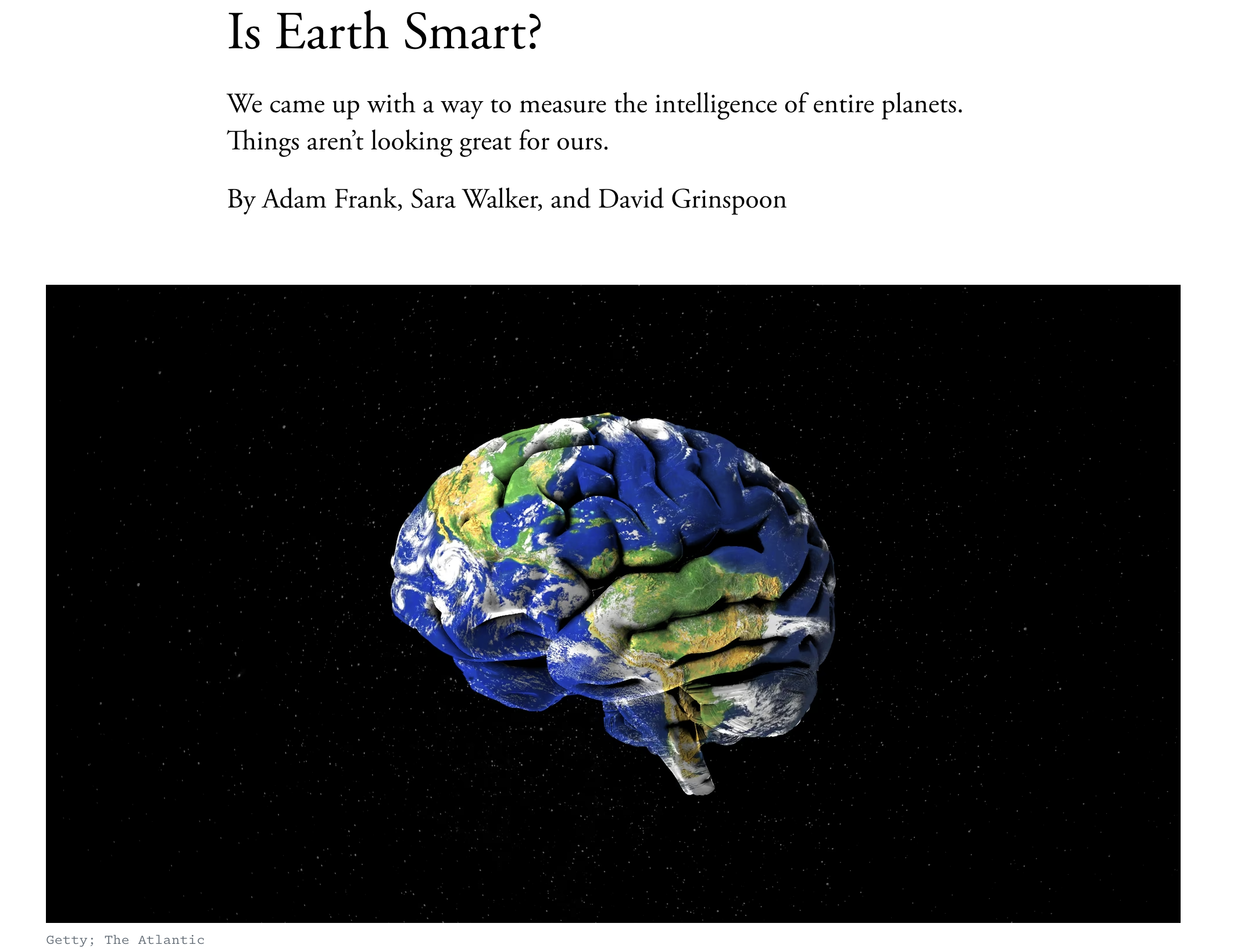
Figure 1: I recommend this excellent article from 2022 in The Atlantic: https://www.theatlantic.com/science/archive/2022/02/biosphere-planetary-intelligence-evolution/622867/?gift=whEZdrZ_-ofaqIQ8x1Vj6Av_ub4j2SrXYQgDFcZdi7M&utm_source=copy-link&utm_medium=social&utm_campaign=share
Given the vast scale of our problems -- climate change, ecosystem loss, toxification of the biosphere -- how do we begin to find solutions on the planetary scale? How do we break out of our individual silos and begin to address the whole health of the planet, sometimes captured in the notion of One Health?
Ultimately, the One Health model strives to find solutions not only for individuals but also for whole ecosystems and even for the whole planet. We need to live in community—not only with all humans alive today, but with all those who have lived before us, with all creatures on the Earth, and with the Earth itself as an entity whose life we respect, or even venerate. If we reimagine ourselves within that context, destroying Gaia, or ecocide, becomes completely abhorrent. In committing ecocide, we are literally committing suicide—and filicide and infanticide and fratricide and sororicide and patricide and matricide.
Can we become the corporate intelligence of the planet, the noosphere? Is there a planetary intelligence in and of itself? We tend to believe we are smarter than we are and confront the wreckage of our foolish mistakes only when it is too late. We tend to fix our mistakes with solutions that only create more mischief. But astrobiologists Adam Frank, Sara Walker, and David Grinspoon believe that we must create détente among biosphere and technosphere, that Earth has made it through three stages of evolution—immature biosphere, mature biosphere, and immature technosphere—but needs to complete a fourth: the mature technosphere. Already at the mature biosphere stage, an early form of planetary intelligence self-regulates the system. And a technological species does not necessarily enhance a planet’s intelligence. The technosphere, which emerged from the biosphere, includes “the interlinked set of communication, transportation, bureaucratic and other systems that act to metabolize energy resources.” But tragically, our technosphere is not integrated with Earth systems and is actively working against itself. Frank, Walker, and Grinspoon call it “formally stupid,” not in a state of planetary intelligence. A mature technosphere would “self-maintain the entire Earth system.” They believe this must happen if civilization is to continue to exist on the planet long-term. We must “scaffold layers of complexity and weave the living and nonliving domains together.”[i] That goes far to answer the question of not only how we could be so stupid, but how we can collectively become much smarter. We need to work on building the noosphere, which almost certainly includes the technosphere, the vast universe of knowledge comprising the internet and now AI, to create a more intelligent brain for our planet, or at least to not ruin the intelligence it already possesses.
In doing so, we should also look to wisdom traditions of the past. The Lindy Effect popularized by Nassim Nicholas Taleb in Antifragile applies in both my previous book and this one. The Lindy principle, in brief, argues that the best ideas will persist the longest. For example, plastic cups seemed like an improvement since they are light and unbreakable, but we now know that they are much more likely to harm us than inert glass ones. In seeking for solutions, to some degree we should go back to solutions of the past that are more in harmony with nature. Biomimicry, rewilding, and restorative agricultural methods are all based in ancient nature and tradition. Increasingly, people are recognizing the value of considering Native American and Indigenous ways of knowing alongside Western science.[ii] We need to reimagine conceptual narratives according to a new shape—the circle, the sphere, the whole, a plenitude. We must not only be brave individually; we must also be daring on a civilizational scale. Humans can do hard things if they try, if they dream. And we must do all this while strengthening our ethical framework. Intellect without ethics is a disaster.
How can we avoid being fragile in this context? Not by poisoning ourselves right up to the point where our children develop cancer, autism, ADHD, or endocrine disruption in the womb, but by building margins of safety and redundancy into our natural systems as we try to reconcile our technosphere and noosphere—or the complex thinking and communication systems among humans—to the ecosphere. Typically, parents are fragile in regard to their children: if your beloved child dies or is permanently harmed, you are unlikely—take it from me—to be made happy by any other gains or pleasures in life.
This whole technological world we have developed to serve ourselves needs to also not kill our biological systems and our ecosystems and the climate system on which all life depends on this living planet. We need to seek a new symbiosis of these three systems. What this means in terms of chemical regulation, climate action, and land restoration is that we must err on the side of caution, employ the precautionary principle, stay within planetary boundaries, and strengthen the resilience of our natural and human worlds in a scaffolded, enmeshed, intricate system.[iii] We need to build in substantially greater margin of error, particularly since we see widespread harm already occurring. We need to use our imaginations and foray into utopian thinking that revisits past wisdom traditions, coming back down to nuts and bolts, dollars and donuts in the end. What is the greatest harm we could endure, and how can we prevent it? What is the greatest good we can imagine for ourselves and future generations, and how do we get there in practical terms, day-by-day, step-by-step? Every one of the inspiring scientists, healthcare providers, and activists featured here has worked assiduously, on a daily basis, for these most important outcomes.
Systems are not just built from above. In fact, systems, particularly natural systems, are built from the ground up, from the cell out, through gradually accreted changes and additions, and constant dynamic processes. So individual actions are imperative not only to protect our individual children to the extent that is possible, but also to change the culture of our whole industrialized, capitalist society on the cellular level. Culture is the heartbeat of the organism, and Western cultures primarily responsible for the destruction need to listen to and synchronize with the heartbeats of non-Western, non-hegemonic and more ancient cultures, just like babies exhibiting bio-behavioral synchrony swiftly match heartbeats with their smiling mothers.[iv]
If parents educate themselves and make choices that are better for their children, like choosing organic foods, they are more likely to support politicians who are legislating for chemical regulation at top organizational levels. If healthcare providers educate themselves and incorporate environmental health into curricula, they are better prepared to educate their patients, employ the precautionary principle more effectively in medicine, and try to make the practice of medicine more sustainable. If scientists learn not only about their own disciplines but also explore others, they may avoid the disastrous decisions that chemists with a dozen chemistry courses and one in basic biology make in utter ignorance of what they do not know, in the utter assurance they have acquired by being brilliant at only one very limited area of knowledge.
One partial diagnosis of the problem is emerging here, and we should keep them coming. Devising solutions for climate change and environmental degradation should elicit our greatest bursts of creativity. We should subsidize those bursts with money, support, resources, and most importantly, attention.
We need to make visible the invisible. We need to make heard the silent. We need to reveal the inner workings and secret machinations by which a very few people poison all the rest of us, who mostly remain complicit.
Collectively, we humans made the world as it is now; we have shaped and twisted the natural world to fit our desires. And we cannot twist it back, not completely, but we could move into a future that looks in some ways more like the past, where we find some compatible co-existence between ecosphere, technosphere, and noosphere, where, as in rewilding, we sometimes let nature take the lead. We should not reject the best technologies—the best of medicine, the vast knowledge of the internet—but we should certainly adopt a better, slower balance between screens and nature, between so-called advancement and traditional knowledge, circling back to the best of the past as we seek solutions for the future.