As I fail students and turn them into the Provost for cheating with AI, I have been thinking about this long predicted but still strange evolution of our culture and civilization.
Some students are rightly ashamed and apologetic for using tools that are explicitly forbidden in the class – forbidden so that they can read and write and learn and think themselves. But shame is going out of fashion. Others say things like, everyone is doing it, no other professors have had a problem with it, or they don’t know why I am adhering to my principles when this is the inevitable way the future is moving. Yield to the machine, that is. Submit your rationality unto the hive-mind, they seem to say. Resistance is futile, in other words, as the Borg of Star Trek Next Generation droned to their helpless victims. It was not just that the cubic-technofuture-based Borg thought they would overcome and kill and ravish every civilization, turning all survivors into revolting and pitiful half-human, half-machine chimeras. They also believed their collective intelligence and tech-based way of life was superior. Sound familiar?
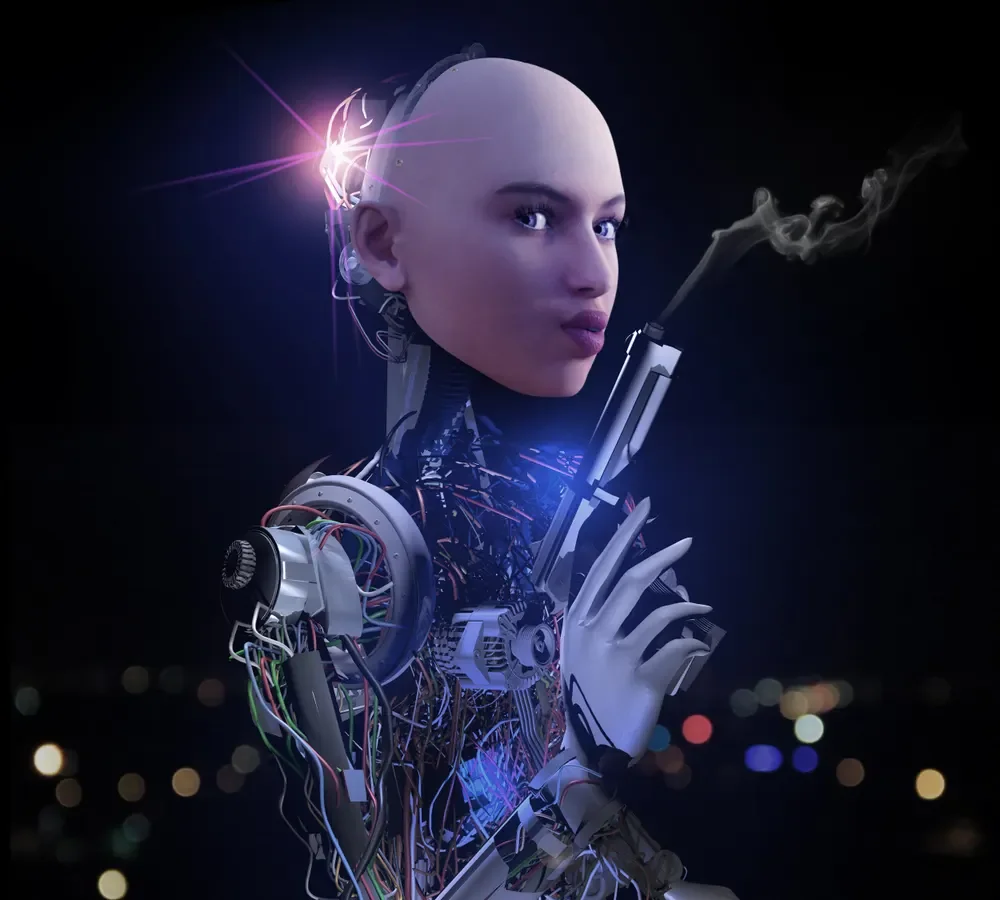
It astonishes me how many people are content to plug themselves voluntarily into the Matrix, how many people submit to becoming an inert protoplasmic component of this weird human-silicon-AI cyborg we are rapidly evolving into.
I can contemplate with equanimity attaining a true noosphere, a human-machine-mediated intelligence of the planet, but I hope that in this animal-machine complex, we maintain our souls and preserve our autonomy if not complete control. I hope we hold our own, just as the trees that rely on mycorrhizal connections are still themselves while using fungal networks to connect themselves to other trees and to function as an enormous brain of the woods. Sure, we are influenced by the gut bacteria in our intestines, mind and body, but we still think of ourselves as the dominant host, the more intelligent species in the symbiotic relationship. But many individuals talking about AI seem far too ready to hand themselves over to alien overlords so long as they are steadily fed adequate nutrients and carefully hosted in a comfortable environment, just like the symbiont bacteria in our gut without whom we could not function. These AI fatalists are outsourcing the quality we think of as most distinctive to us as a species – our intellect.
Early research shows how AI atrophies the brain in real time. That’s how the brain works: neural pruning eliminates those functions that are not used, building only those parts that are exercised. Learning to juggle, just for instance, increases grey matter by a full 3% within three months. Because of synaptic pruning, people are unable to learn to speak a new language without an accent after age twelve or so. AI, meantime, may be making our students “subcognitive.” Even Microsoft has identified that AI use reduces critical thinking skills. In a study by researchers at MIT, subjects who employed ChatGPT to write essays showed 47% fewer active neural connections, and less activity in areas of the brain responsible for memory, and creativity.

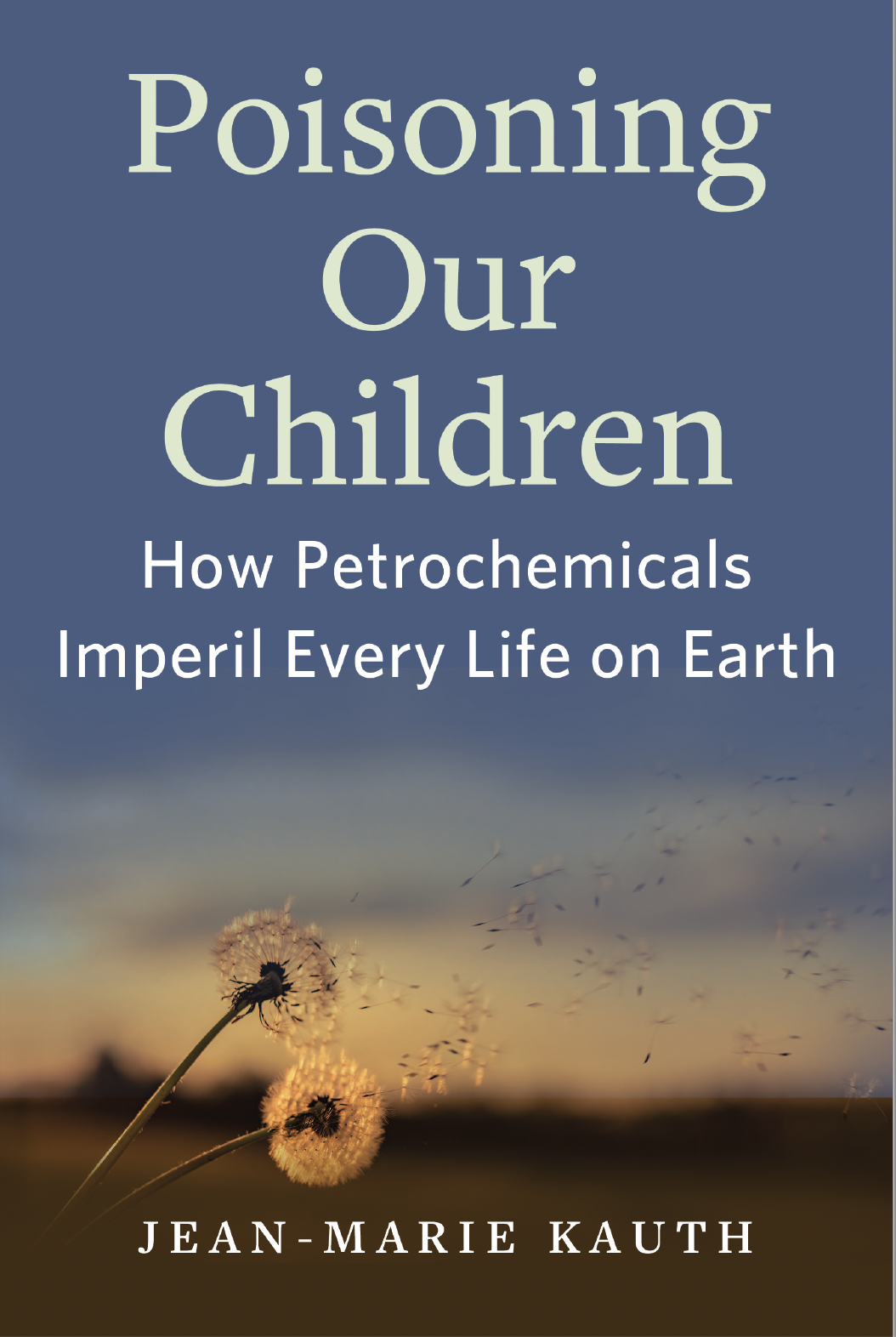
And it could be that even our biological existence is at risk. We are bathing ourselves in a filthy slough of 350,000 toxic chemicals, many of which are synthesized to construct our machines, in addition to the WiFi and EMF that is now utterly ubiquitous. EMF can change cells in cell culture, and early studies raise serious concerns about excess cell phone exposure, particularly in children. The liquid crystal monomers (LCMs) that make up all our screens already contaminate virtually all household dust and human bodies and have been identified as endocrine-disrupting chemicals (EDCs). And that is just the tip of the toxic iceberg. My next book, Poisoning Our Children, which I have just sent off for final review at Johns Hopkins University Press, examines somewhat more of the iceberg, though hardly all that lies below the surface.
I didn’t really believe that in my lifetime, so many of us would choose the Matrix or Terminator or the Borg as our preferred utopia – the path to which we were voluntarily committing, as we build ever more energy-consuming, water-slurping, and soul-sucking data centers in the U.S to power this monster.
But in this domain, as in the domain of our failing democracy, I feel this overwhelming urge to resist. To rage against the machine. I refuse to believe that resistance is futile. And the next book on my reading list? Against the Machine: On the Unmaking of Humanity by Paul Kingsnorth. I hope after reading it to be able to make a case that there is some way out, that resistance is entirely possible, though The New Yorker reports that Kingsnorth is not optimistic. That will be the theme of my next project, provisionally titled Closing the Circle: Pursuing Prevention in a Toxic World. I will let you know.
Meantime, what can we do? Inquire. Research. Reflect. Resist. Persist. Rebel. We can act to create a future that adheres to humanist values, that prioritizes justice, that preserves the ecosystems upon which all life depends, that inculcates those ideals of our founders we revere – life, liberty, and the pursuit of happiness.