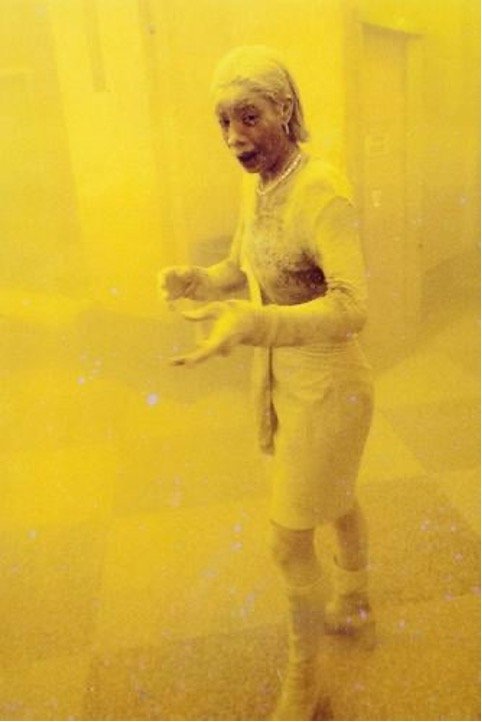
It seems karmically conspicuous that I post this interview with one of the great leaders in the fight against lead just days before the US Army blows up a cache of lead azide, an explosive that will shower down in a toxic layer over Iowa and locations in neighboring states up to 100 miles away. They are doing this though a safer alternative had been available. Haven’t we learned this lesson yet? If not now, then when? Read more at https://www.chicagotribune.com/2026/11/23/iowa-bomb-making-chemicals/ and https://www.washingtonpost.com/climate-environment/2026/11/23/trump-orders-military-halt-iowa-detonation-plan/
Take as much care you can. Alert friends and neighbors. Demand testing. Monitor your children. And fight against the continuing poisoning of our children with lead – and many other less well characterized contaminants in future.
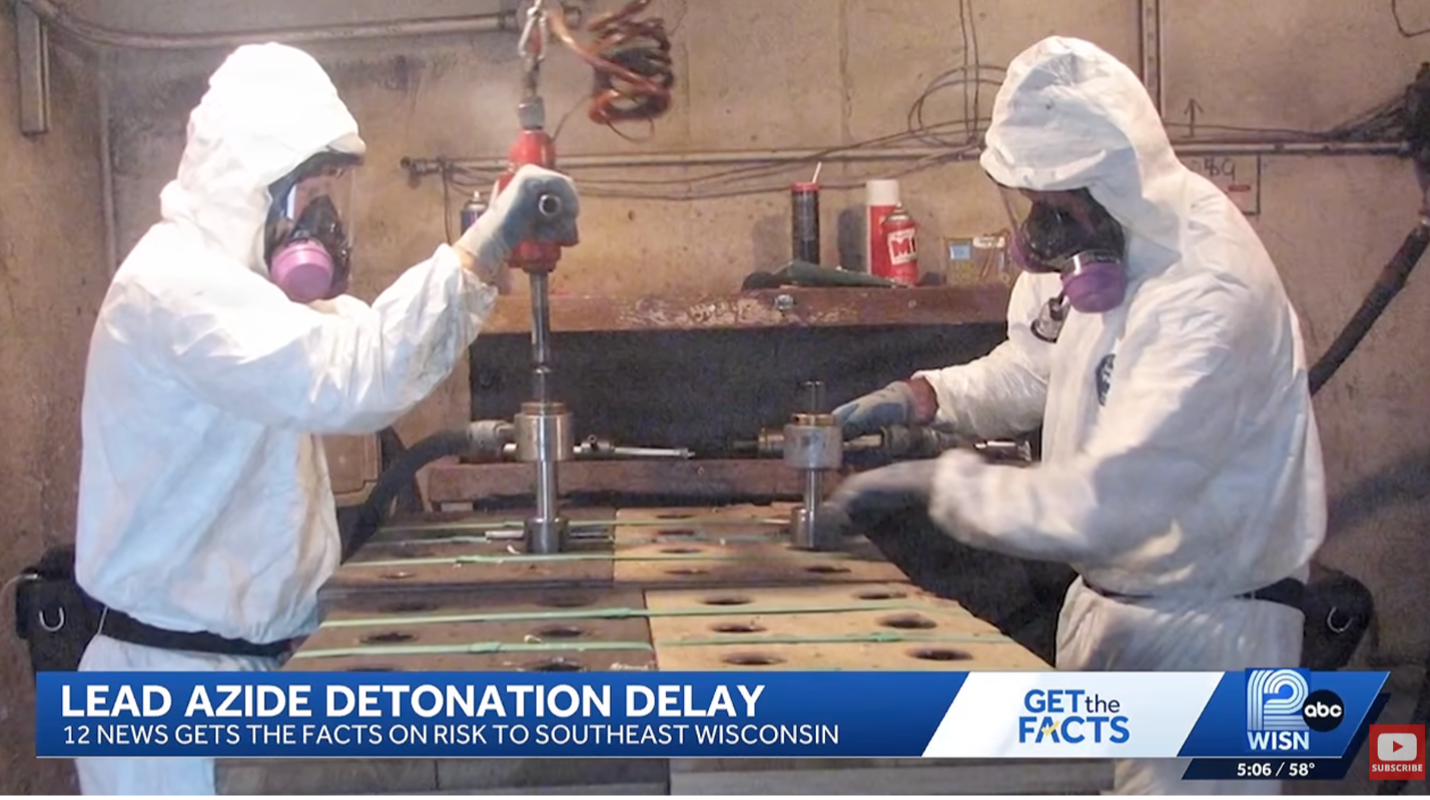
Army Detonation of Lead Azide in Iowa: https://www.youtube.com/watch?v=oGaUXvOMBxE
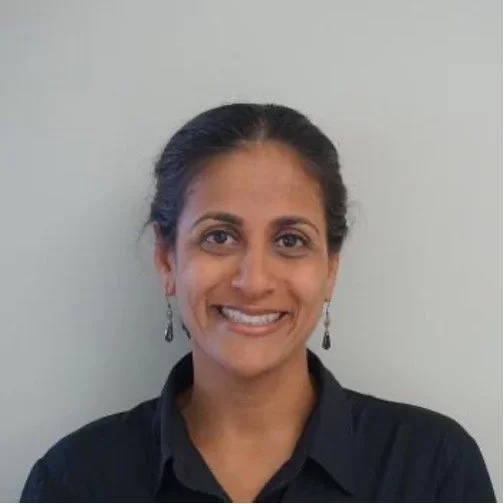
Dr. Mary Jean Brown completed her doctorate at the Harvard T.H. Chan School of Public Health and later became a professor at Harvard. She also served as the Chief of the Healthy Homes and Lead Poisoning Prevention Branch at the CDC. I am fortunate to have gotten to know her serving on the Children’s Health Protection Advisory Committee to the EPA (CHPAC). At our first meeting, she smiled at me across the room and pointed out the similarity in our names. Dr. Brown has co-authored some of the most important papers ever published on childhood lead poisoning and was on the ground as people realized just how badly they had poisoned children – virtually all American children – and how dire were the consequences of that rampant poisoning.
When I asked her to look into the future back in August, she pointed to the link between corruption and ill health: “I would be very interested in studying the impact of government corruption specifically on health…. Are we going to do something about this corruption or are we just going to let it go on?” This is a connection I explore in my book and blog – and that we have seen evolve dramatically during and after the midterm elections. I hope and believe people are starting to make an explicit connection between political corruption and the poisoning of our children – and us all.
Interview occurred August 5, 2026. Lightly edited for length and clarity.
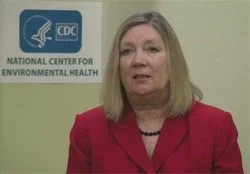
JMK: Good morning, Mary Jean – it’s so good to see you!
MJB: Hi, Jean-Marie. it's nice to see you too. I don't hold out much hope for CHPAC.
JMK: I'm worried that they won't even convene it.
MJB: Right. They don't respond to inquiries, and it's like that at CDC too. It's not that they don't agree with you or that they dislike you. It's that they're terrified, you know. They can't talk.
JMK: Yes. I think that one reason this administration would want to avoid reappointing members to CHPAC is they didn't expect how much we would agree with many of the things MAHA was saying. And MAHA was their agenda. I think we would have been a force to be reckoned with, honestly. I don't think most of us ever believed they would really give MAHA the time of day after the election. But even the lip service could have gotten them in trouble with industry.
MJB: Well, there are at least two things that have happened legislatively. One is about coal-fired plants and how many toxic fumes they can emit. And then the next thing was going back from the 100 ppm soil lead standard for Superfund sites. They’ve gone back to 400, and they didn’t get any pushback on that either. I mean, I wrote a letter, and some other people wrote letters, but…
JMK: It’s hard to keep up with everything. They are flooding the zone.
MJB: Yes. It’s like drinking from a fire hose every single day.
JMK: Absolutely. I so often feel pessimistic myself. Poisoning Our Children is really a hard read – and it was hard to write. I would love to get your opinion on it, but I'm trying to show how bad things are, right? The next book is going to be more focused on solutions. It’s provisionally titled Closing the Circle: Pursuing Prevention in a Toxic World. Of course, I have to acknowledge in the first chapter how bad things are. With climate change and widespread environmental degradation, it's hard to be positive. It's hard for my students to even imagine a future. And I think if we cannot imagine that future, then we cannot get there. I don't know if you've had a chance to read Ayanna Elizabeth Johnson's What If We Get It Right?
MJB: No, I have never even heard of it.
JMK: It's good, and the question is excellent. So for the next book, I'm looking towards that. What would it look like if we got it right? And how, working backwards, can we get there? Even if we don't think it's likely, we have to try. You have had a huge success, one of the greatest successes in public health. As I told you, I start nearly every PowerPoint presentation using your graph of dramatic improvement in childhood lead levels. That affected real people. In public health, we don't always see the people whose lives we save. But you saved lives, you improved lives, and it's just an incredible success. So you have a very special perspective.
MJB: Yes. I don't think the World Bank has stood up firmly enough. If you look at just one of the things [that reducing lead has prevented] – if you looked at gasoline, for example – going from leaded gasoline to unleaded gasoline cost approximately 2 cents a gallon between 1983 and 1991. So that's not even 10 years. And the return on investment just during those 10 years was in the billions of dollars. But this is an investment that gives us dividends every single year. Now we're 30 years in. So, I think that's one way of framing the optimism: this is an incredible amount of talent that's being lost [that could be saved].
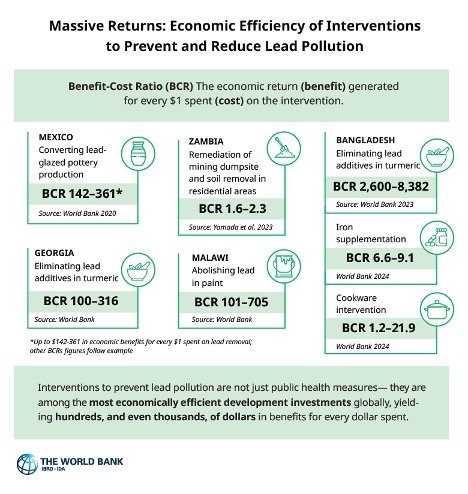
The problem is that when you start talking to people, especially capitalists, about return on investment, they don't like to talk about societal costs. They want to know that the money is going to themselves. ‘How do I get my hands on this money?’ And we're saying, no, no – everybody's going to get a piece of this money, and everybody's going to have an improved life because of that. Talents that we've destroyed in the past will be able to mature and be successful. One of the professors at Clark University in Atlanta says, you got to understand who pays and who gets paid.
JMK: I love that. It's externalized costs all the way. And I agree. This is something I wrote about more in my first book – it really is capitalism. Now, maybe it is harder, as they say, to imagine the end of the world than the end of capitalism. I think even modifying capitalism is difficult. What do we have to do to get there? I don't know. You know, with lead, we've had all those savings of IQ points. But when you look at the data on organophosphate pesticides alone, we are now losing almost as many IQ points to that one family of pesticides. And so I do like to frame it as we could potentially have the greatest public health success ever if we controlled the chemicals. But right now, we have a public health emergency – many of them.
I would love for you to just tell me your story from the beginning – maybe with an eye to what we can learn.
MJB: Well, we don’t want to go back 76 years. How about if we just go back 40?
JMK: That would be fine. Although if there was something in your childhood – whatever inspired you to get where you are, that origin story – I'd love to hear it.
MJB: Okay. So I’ve always known I wanted to be a nurse. And part of that, I think, was the hat and the white dress and all that. But I always knew that I wanted to help people. So I applied for licensed practical nurse school when I got out of high school. And they wouldn't take me. It's a one-year degree, and I didn’t want to spend a lot of time in school. I just wanted to help people. So then...I spent the next 30 years in school. Even very early on when I was trying to get my associate's degree in nursing, I knew that there was something out there, there's something about me that I didn't…. I was a really good staff nurse, and I loved being a staff nurse. I loved going into that patient’s hospital room, looking around, seeing what needs to be taken care of, clean it up, move on to the next unit. I loved it. But there's something inefficient about doing things one at a time, right? God bless people who do it for a living.
But it just didn't seem efficient to me. And so I got my degree, my ADN, associate degree in nursing. I worked for two years in a big public hospital in Cleveland called Metro. I saw everything. Yeah, there was nothing that I didn't see while I was there.
And at the time, [this inefficiency] kept bothering me and bothering me. And then someone said, well, you know, if you get a bachelor's degree in nursing, you could do research. Which is not true.
But I packed my kids up and moved to Boston and went to Boston College. I ended up at the State Laboratory – my final semester in nursing school – working with the childhood lead prevention program in Massachusetts. At the time, we tried to differentiate between prevention and toxicity. But the threshold at which we thought kids were in trouble was 30 mg/dL at that time – in 1982.
And I started looking at the records, and I realized that we had inspectors over there, and we had pediatricians and pediatric health centers over here. And they weren't talking to each other. And these guys in the pediatric medicine – whatever they had heard as the magic lead number when they were in medical school was how they were operating. And for many of them, it was 65 µg/dL – because that's what Chisholm said -- 65, right? There had been a few other people earlier than Chisholm, who said, well, no – the threshold blood lead needs to be much lower. Byers and Lord is an article you might want to look at. It came out in the 1940s. I can send it to you if you are interested.
JMK: Yes, please.
MJB: This woman, Lord, she was a psychologist who started following up on kids who had been through the lead clinic at Children’s Hospital in Boston several years later. And she found out that, lo and behold, they couldn't read, they couldn't sit still, they just were not capable of getting….
These were all kids who had blood at 65 or higher because they were chelated at Children’s. And so then people started thinking about, well, maybe we should lower the threshold. The National Health and Nutrition Evaluation Survey (NHANES) that Kate Mahaffey was on – who is a dear friend of mine – found that the average blood lead level of children in the United States at that time – in the mid 1970’s – was 15 µg/dL.
So if you use the three-microgram or the five-microgram threshold, virtually every child was lead poisoned. That opened some eyes. That came out in ’77, and then under Reagan, all the child health programs – teen pregnancy prevention, low birth weight, infant mortality, lead poisoning – all got lumped together under a block grant – because block grants were thought to be more efficient. And then the funding was cut by 40%.
Every lead program in Connecticut went out of business the next day. But in Massachusetts – because Massachusetts has a lot of old, lead-painted mansions – there was a critical mass of wealthy children, affluent children – and their parents were wild. Their parents were the most committed activists. It was like Mothers Against Drunk Drivers (MADD). They were out there. They managed to hold onto the Massachusetts lead program. So we had money coming in from the state, and then we got money from the Maternal Child Health Block Grant. Not every state used their Maternal Child Health Block Grant to fund lead poisoning, but we did.
Joe Biden takes an awful lot of credit for this – as far as he was concerned, lead was his legacy. He told Ruth Ann Norton he solved the problem. So when the Democrats came in again, and the CDC came back into the game – and that was 1989-90 – Congressman Louis Stokes from Cleveland was the person who pushed us. He really rammed it through. He was one of those congressmen like Clyburn. when CDC came back into the game in the 1990s, I was lucky – because I was from Massachusetts, and we were a model.
So as we tried to develop standards for the amount of lead in household dust or soil. Our first question would be, well, what's Baltimore doing?
Baltimore's first question would be, well, what's Massachusetts doing? So then, when CDC came back and then they started having grants out to the states too, I was lucky enough to get one. So now we had gone from $1,000,000 a year budget in 1982 to $3 million a year, $1 million in state funding, $1 million in block grant funding, and $1 million from CDC.
In the meantime, I had tried to address this lack of understanding and knowledge in the pediatric health care community, and quite frankly, the kinds of things that some of the inspectors were up to.
I started the case management system. So every day I got all the high blood lead levels from the laboratory that was right down the hall. And I would call the pediatric office, and I would say, Joey has a blood lead level of 70. It's really important that you call Dr. Graef, our medical consultant at Children's Hospital, because Joey probably needs to be treated. Well, they didn't want to go and ask John Graef. They didn't want to appear like they didn't know what they were talking about. So I would give them a little – nurses do this all the time – I would give them the abstract of a paper: well, here's what happens. Here's what the dose is. Here's how you do it. Then they followed up with John.
I mean, it's not rocket science. And so with this new funding from CDC, and a threshold blood lead level now at 25 micrograms per deciliter, I could hire 5 nurses. And I put a nurse in each one of the five health regions in Massachusetts and had them do what I had been doing from Boston.
And it was pretty successful. There were pockets of people who were … it was just very, very hard to move them. John couldn't make them do anything either. But for the most part, [it was successful]. I started doing a roadshow. I got accredited for continuing medical nursing education credits, and I started going around. My very first lecture I gave when I didn't have PowerPoint; I had overheads. Remember those? It was at Emerson Hospital in Arlington, Massachusetts, just north of Boston. And I came in, and I did my shtick. Everybody does the same lead lecture. Phil Landrigan actually does it better than almost anybody else because he's funnier. But so I went in there, and I did it.
And at the end, this man came up to me. At that time, most of the research on lead effects in children was done by Herbert Needleman and David Bellinger. So my lecture focused on them a lot.
And this man came up to me, and he said, “you know, your lecture just meant so much to me. I'm so appreciative.” And I said, ‘oh, thank you’. And then he looked at me, and he said, “I'm David Bellinger's father.” Thank God he didn't tell me before I started. He was a surgeon at the hospital.
I trained the programs to do it in the inservice. Then we had 6 people going out to talk about lead. I've been to places where I projected the overhead with the plastic sheets on top on a refrigerator in the conference room, right? But it worked, and it became a model.
They liked me at CDC in those days. When the Southeast Asian diaspora started, and those kids came to the United States, they were very anemic; they were practically starving in the refugee camps. Many of them had parasites, and a lot of them ended up in Lowell, Massachusetts. Now, this is a story you can only tell in America. Lowell, Massachusetts had a Buddhist temple. The monks were Germans. But it was a Buddhist temple. And of course, the nurses were of Irish Catholic ancestry. And those three ethnic groups got together – the leaders in the Southeast Asian community, the German monks, and the nurses – and worked really well together. The CDC gave me money to put together a Southeast Asian lead poisoning prevention program in Lowell. The director, at the request of the Southeast Asian community, was a woman named Joan Seeler. Joan had worked in the refugee camps overseas for most of her career. It was very moving to walk into a room with Joan because people would come flying out of the audience or the group and say, “Joan Seeler, Joan Seeler – you saved my life!
She worked really hard, and also hired Hmong, Cambodian, Lao, and Vietnamese staff, so we covered all the language bases. It’s not there anymore, but that's mostly because they don't need it anymore.
As I was progressing through this whole thing with CDC, my boss, Ralph Timperi, the state lab director, said to me one day, “Mary Jean, I think you should get a masters degree in Public Health.” Well, that sounded all right. And then he said, “and I think you should go to Harvard.”
And I said, “sure, Ralph.” And then, I got into Harvard!
I did the one-year masters while I was working full time at the health department. In those days, you had to go to school during the day. They didn’t have part time. But they let me go half time. At the end of the first year – I used to tell my students this – that June, I felt like I was recovering from a long illness. I was so tired. I had also hired social workers for each of those regional offices because the families are in crisis – they need everything. They need nutrition and psychosocial support and rent assistance, and that is what social workers do. We figured out how to get Medicaid to pay for nurse home visits. So the nurses and the inspectors worked as a team rather than as adversaries to visit the homes. That part was going along pretty well.
And then I graduated, and I just said to Ralph, “I want the whole thing – I want the PhD.” And he was very supportive. So I left the lead program. I was working on a randomized community-based trial of nurse home visits in Rhode Island – some of my dissertation came out of that work.
When I graduated with a Doctor of Science from the program, Harvard offered me an assistant professor position. I didn’t need to go back to the lead program, and some people in the program leadership weren’t that happy with me. So it was fine – until I got to Harvard and found to my dismay that Harvard faculty is primarily dependent on outside grants for salary.
JMK: What?!
MJB: At that time NIH had no interest in lead. And whatever interest they had, there were only two people who could get money. One was Bruce Lanphear, and the other was Howard Hu. He was in California at UCLA – and is at San Diego now. He was a big occupational medicine guy. The CDC didn’t believe in nurses. First off, they thought they were too expensive. And they had a lot of men coming out of the service after they had done their 20 years – medics, or some kind of environmental or sanitarian guys – and they go into the civil service. CDC didn’t think they needed nurses. It took a long time to get them off that dime.
I was there on the permanent faculty at HSPH for three years. After I found out that Harvard wasn’t going to actually pay me, and I couldn’t for the life of me get money out of NIH, I was in luck.
And as you know, the director of the Lead Poisoning Prevention Branch at CDC opened up, and Anne Guthrie, who was at the National Center for Healthy Housing, threw my hat in the ring. And so I went through all that, and they hired me. It was actually Dick Jackson who recruited and hired me to fix the lead branch. And so I went down there and fixed the lead branch in a lot of ways – it was very different when I left, but I left under a cloud again.
Tom Frieden was director of CDC at the end of my tenure, and he had these winnable battles – about ten of them. Lead was not one of them. He hasn’t won any of them yet. But he cut lead program funding by 98% so that he could move money to these winnable battles. Some of that was personal – against me.
Well, partly because of what happened with lead in the water in DC, I was under scrutiny from a guy named Marc Edwards. He has actually blamed me for Flint – because he said that I fudged the data in DC – because we didn’t find any children who were dying, being admitted to the hospital, or an uptick in chelation. We didn’t find any serious illnesses. What we found was a whole bunch of people who had blood lead levels more than 5 µg/dL. But that’s not glamorous enough – they don’t look sick, and blah, blah, blah. He said I got away with it, and that’s why Flint happened. And when you get a reputation in the federal government – even if it’s not true – people don’t want to touch you. They want you to crawl into your desk and come out under another administration.
While I had been a branch chief, I continued to teach at Harvard. I had a program evaluation course where I brought students and CDC lead staff in the states together so they could learn about evaluation. The goal was not to get the CDC funded state staff to become professional evaluators. My goal was to get them to be savvy consumers of evaluation so they couldn’t have the wool pulled over their eyes. And the students needed to get out into the field. Some years, this was the only field opportunity they got.
So I still had the connection with Harvard. As one does, I went back to Harvard, and I taught for the next 10 years – very applied public health evaluation and how the government works – and how you can get your stuff on the agenda – because the students today have never had civics.
JMK: I know. It’s distressing. I cannot believe they have cut civics.
MJB: Yes. When I first started teaching in the permanent faculty, I taught maternal child health 101. I would start talking about the federal government, and the Chinese or the Japanese students would look up like deer in headlights. So I put together a little seminar for them and said this is not what happens in Japan, but here’s how it happens here. It was kind of a more sophisticated “school-house rock” version. Then I realized, you know what? Nobody else in this class understands either. I developed a course on how to get your issue on the political agenda. It did well, though it sputtered out the last year I was there.
I think that’s because nobody wants to go into government now. They all want to start their own companies. They shy away from government. And it’s understandable, but I don’t know who is going to rebuild this system.
I’m still working a little bit – one interview with a reporter a month And if something pops up like the lead in cinnamon.
JMK: Sure.
MJB: I am still working with colleagues at Harvard and in Mississippi – way away from lead. Mississippi has the highest maternal mortality most years, and that hasn’t changed – 20 years it’s been like that. So we are testing whether having nurse home visits immediately postpartum for women, a lot of whom are discharged within 24 hours, reduces the severe morbidity and mortality.
JMK: What is most difficult about it? Facing the heat, the racism, the sexism – it sounds like you’ve experienced sexism throughout.
MJB: A bit of all of that, yes. I’ve had some experience working internationally. I have done community-based screening outreach programs in slums on every continent but Australia and Antarctica – because it doesn’t have one yet.
Working in Mississippi is like working in a third-world country, especially in the Mississippi Delta. There are no resources. No community hospitals anymore. The birthing center is a 2 1/2-3 hour drive. They did not do the Medicaid expansion – although women are covered 60 days after birth.
Most of the stuff that has been done around the issue has been around infant mortality. One OB said to me one day that the programs are focused on the candy. We’re not focusing on the candy wrapper.
JMK: Jeez!
MJB: So it is really hard to move things. I am not there. Everybody thinks you can do stuff remote. They forget that you can’t.
JMK: So interesting! I do have some follow-up questions. So were you saying that you've experienced some sexism and bias against nurses throughout your life?
MJB: I haven't worked in a hospital or a clinical setting for a long time. I have a daughter who is a psych nurse at a VA hospital outside of Boston. And from her stories, it sounds like it's not as bad, but it never was as bad in the service because nurses were officers. She works with patients, who, if they were enlisted, treat her like an officer.
The other thing that happens with nurses is that the way a hospital is run, the physicians are considered the product. They bring the patients in; they make the money for the organization. The nurses are considered a cost. So every time there's a merger, every time somebody gets a bright idea in the corporate world that they can make some money, they come in, and they cut the nursing staff. That's always the first thing that happens. And the fact is – and this is not my thought; a lot of people have said this – that you don't go to the hospital for medical care. You go to the hospital for nursing care. They can do almost all medical care as an outpatient nowadays. Right? You need somebody to take care of you. To take over some of the stuff that you would do on your own if you were feeling better. So that's part of it too. But now with more men coming into nursing, that may change the calculus a little bit.
JMK: Of course, as many weeks and even months as Katherine and I spent in the hospital, we know about nurses. Children's Hospital of Wisconsin, where she had her bone marrow transplants, is one place where nurses were really part of the team. It was the primary nurse, the doctor, the fellow, the pharmacist, and everybody rounding together. And that model worked so well. We had innumerable experiences of nurses being so kind and taking care of us. So thank you for that care you've given to others.
All right – the next question is, where do you think this is going? If you were going to say what the status of children's health is going to be in the year 2050, what would you say? Because in some ways, things are getting better, and in other ways, they are getting much worse.
MJB: Yes. I think we are at a very critical stage where the road splits, and it's very difficult to predict which way it’s going to go. What's happening with public health under this administration scares me to death. It really does. It wakes me up in the middle of the night. How many kids are going to die from measles or be blind from measles or have intellectual disabilities from measles? I don't know, but it's going to be a few, if not more than that, right? What if we have another big outbreak? This ‘lettuce outbreak’ that's going on right now – okay, for most people, it's a couple of weeks of diarrhea, which God knows is not pleasant, but it's usually not fatal either, or debilitating for a long period of time. There are going to be some people – especially the elderly or anybody who's frail – who are going to have a bad outcome. But most people are going to get over it.
What comes next? We don't know. Viruses mutate all the time. That's their job in the world.
So, it could be that by 2050 it will look a lot like 1950.
Or it could be that by 2050…. You know, that's not that far away. I mean, I'm not going to see it, probably, but you'll see it.
Well, first off, I think that nurses are going to take over primary care, and I don't think that's a bad thing as long as they get the education to support that work. And I'm not convinced that's going to happen. I think there's a chance that there's going to be another push to get health insurance for everybody, whether that's going to be Medicaid, Medicare for all, or whether it's going to be some kind of a hybrid model – I don't know. In my heart, I believe in Medicare for all. But in my mind, I don't think that these large corporations should be let off the hook. I think they should have to pay benefits, including health benefits for their staff. I'm tired of people who work at Walmart full-time getting food stamps. Right? I am tired of families of enlisted men in the services below the level of sergeant qualifying for WIC.
Why are we the taxpayers funding that? That should not be our job. But I think people are getting really tired of this – what I've thought of as neo-feudalism – that's going on now out there.
I think that by 2050, we will have wiped most childhood cancer deaths off the margins. I think as you're pointing out rightly, if we continue to dump so many chemicals and waste into the water, the air, into the environment, we will probably have more cancers. But I think that the treatments are going to be increasingly sophisticated. They're also going to be increasingly expensive.
So yes, are we making the wrong choice? Putting a lot of money into what we call tertiary care, which means you have to be sick before you get it, and not enough into the primary prevention? Yes, that's true.
You know, my students have asked me, what would I do if I were graduating now; what would I be looking for in a career? And so I have two answers. And it goes along with what do you think is going to happen by 2050.
The first one is that I would be looking at child labor – children going to work at very early ages. It's not a problem in the United States, but it is a problem in the rest of the world. And they are exposed to everything: sexual violence, chemical exposures, occupational hazards from machinery and sharp objects and all that stuff. And then they're not going to school.
But then the other thing, and this is what's happening here too: I would be very interested in studying the impact of government corruption specifically on health.
JMK: Yes. I mean, we can't go on like this. It's just terrible.
MJB: I think that's the answer to your question, though, about what's going to happen in 2050. Well, it depends. Are we going to do something about this corruption or are we just going to let it go on? And, you know, you have students: push one into this, just tell them, go, go, go figure it out.
JMK: I do my best, and I have had a few students who were going to law school, and then because of my courses, they pursued environmental law. And so yes, the earth needs a good lawyer, and so do people who are being poisoned. I agree with you.
The next question is somewhat similar, but with a little bit of a flip. This is the central question I now ask my students. Imagine it's 2080 or so, and imagine that the world is pretty good, maybe even better in some ways, different, of course, than it is today. What does that look like and how do we get there? Given our huge, huge challenges as we pour accelerants on a burning climate, toxify the entire ecosphere, devastate biodiversity, and thereby jeopardize political stability, et cetera, et cetera, et cetera – what would it look like if we got it right, to riff on Ayana Elizabeth Johnson?
MJB: Let me start from the beginning. Once upon a time, in Cleveland Ohio, they put the water intake 5 miles out from the shoreline because you couldn’t poison the water that far out. But of course, it happened. And then we dumped an awful lot of stuff in the ocean because God knows, you can’t pollute the ocean – it’s too big. Well, we certainly have done that with plastics. So what I see by 2080, is a lot of polluting and dangerous mining, smelting, oil refineries, the data centers – I see it being shipped into low-Earth orbit. God knows, you can’t contaminate eternity, you can’t contaminate space, right? I’m not sure that that’s right. I have a son who is an engineer, and I was just talking to him yesterday and saying, you’ve got to think about this, Tommy, because this is where it’s going.
JMK: That’s grim – because there’s already a lot of space garbage.
MJB: Right. So then there’s lower Earth orbit, there’s middle orbit, and it would just keep going out.
JMK: I think you're saying that it's harder to imagine people constraining their desires and consumption than to imagine some external fix. Wow. All right, well, Mary Jean, is there anything I should have asked you that you want to tell me?
MJB: When I look forward – just with lead, I think the future means we need to really work harder internationally. I helped write the book from the World Bank. But UNICEF has one, WHO has one, USAID had one. Everybody has one compendium with some kind of plan in it – we don’t need more of that. We know what needs to be done, we know how, and worldwide, we know where it needs to be done first. And we know what the return on the money is.
It’s hard to work in the US – every state has its own little way of doing business, and then they say, well, this isn’t Massachusetts. And so it’s hard to do that worldwide – but that’s what has to happen. Taking lead out of gasoline is a really good model. Where EPA fell apart on taking lead out of paint internationally was the enforcement arm. It has to be enforced, and that takes political will, political savvy. It takes people at the World Bank stepping up to the plate a lot harder. They need to step up. Some of the stuff that I said they should do – they took out of the book. Otherwise, that is the only way to stop it – to do everything we can to clean up the mess that’s already here and then stop putting lead in anything.
JMK: And then we need to tackle pesticides, PFAS, and plastics. I think people tremble to think about trying to back off from plastics. I mean, I have contacts in my eyes. I have plastic in my hips. But of course, we could do something.
MJB: Yes. But the plastic in your hips is going to stay there for a long time. It’s not going to end up in the water.
JMK: A while. And we could reduce plastic 75% – don’t let the perfect be the enemy of the good, right?
MJB: Yes, that’s right. But see – I’m a one-trick pony. I know a lot about one toxic chemical – lead….
JMK: We need specialists for sure.
All right. Is there anything you would like to ask about my project or my experiences?
MJB: No, I'm looking forward to reading the book, and I'm hoping that a lot of that will be in there.
JMK: It is – absolutely.
MJB: I understand where your passion comes from. And I certainly respect that. And I wish that you hadn't had to go through that. I mean, it's wonderful that you have the passion and you're doing all this great work. I think you could have found something else to motivate you. But I wish you hadn’t had to lose Katherine.
JMK: Oh, oh, yes. I could have been a happy professor of medieval literature for the rest of my life, and Katherine would have been brilliant. She would have made her own contributions. And so, that's the horrible waste. What motivates me is, I would do anything to prevent this happening to other children and other families.
MJB: Yes. I know – their parents….
JMK: Well, it’s been a pleasure, Mary Jean. It always is. And I’m sorry I’m not going to get to see you at future CHPAC meetings. Was your term up, or were you going to be still doing it?
MJB: They were telling me that I was going to be just re-upped for another three years. But I haven’t heard anything back.
JMK: So we would have been able to have lunch together again if it had not been for this terrible administration.
MJB: I don’t get to Chicago often, but sometimes I do.
JMK: It would be nice to meet up!
MJB: I will let you know if I get out there. There is another lead guy there – David Jacobs. He was the Director of the HUD lead poisoning prevention: Healthy Homes. And he has been in the lead business almost as long as I, but on that side. He was also the science director at the National Center for Healthy Homes. I will give you an electronic introduction to Dave – he also wrote a book, and I’m sure he’ll be happy to tell you all about it. He’s at University of Illinois at Chicago.
JMK: UIC has an amazing School of Public Health – they have the PEHSU there.
MJB: And if you ever decide to do some kind of a seminar, and you need somebody to speak at it, you could call me.
JMK: Thank you so much, Mary Jean!