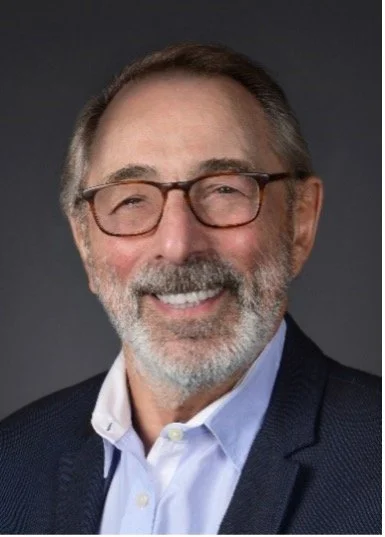
I have followed the prolific research of David Bellinger, PhD, Professor of Neurology and Psychology, Harvard Medical School, Boston Children’s Hospital for many years. He particularly focuses on the impacts of environmental chemicals on children’s neurocognitive development. He was lead author on a key assessment that found that organophosphate pesticides, the class of chemicals that we think killed our daughter, has also resulted in the loss of 16.9 million IQ points per cohort of children 0-5 years old. This is a staggering additional impact and formed a major basis for action against chlorpyrifos, unsuccessful though that effort has been.
Along with Dr. Richard Jackson, he helped start the International Society for Children’s Health and the Environment (ISCHE) and became the first President. Dr. Bruce Lanphear described how both Dr. Bellinger and he were deeply influenced by Dr. Herb Needleman in work on restricting lead use, as were so many other pioneers in the field. We need to apply the principles they developed to innumerable other contaminants of our children.
Many things Dr. Bellinger said struck me. When asked why he thinks we are so recklessly poisoning our children, he replied that “Our society values wealth and convenience over health. It’s as simple as that.” That is even more true today than we spoke at in January of 2024.
One thing I said in reply about the underfunding of public health was that “There’s very little glory in preventing a disease, right? You never know who that person is, and they can’t come back and thank you.” I have a lump in my throat as I think about that and now say, “Thank you!” on behalf of all the parents whose children were not maimed or killed by the poisonings he helped to prevent.
This interview has been lightly edited for length and clarity.
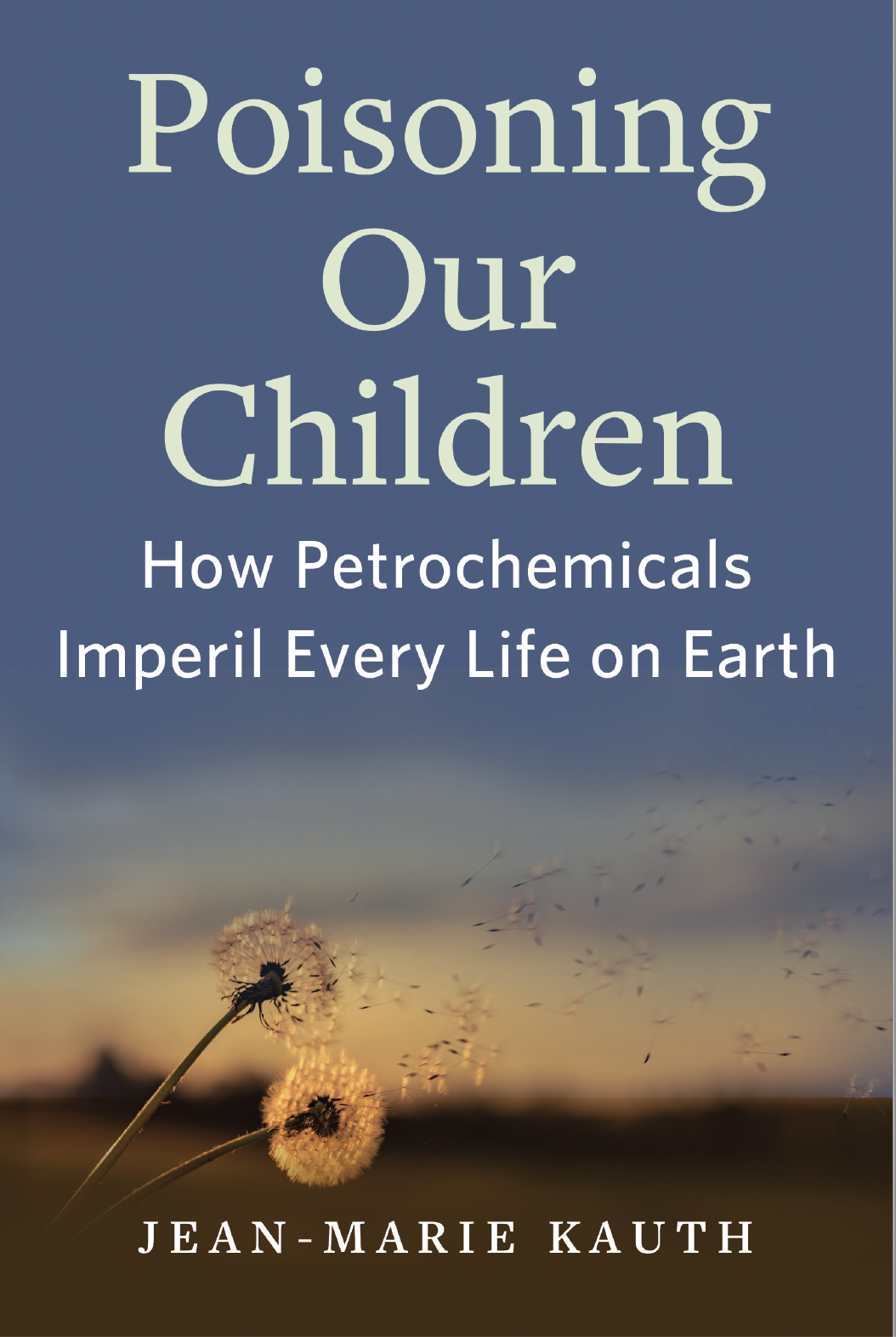
The book I have worked towards for more than 20 years, Poisoning Our Children, is now available for pre-order at https://www.press.jhu.edu/books/title/54124/poisoning-our-children
Pre-orders are hugely important, as they affect whether bookstores stock the book, how algorithms surface it, and how seriously publishers take authors. Your support matters more than you know. All author proceeds will be donated to Environmental Health non-profits.
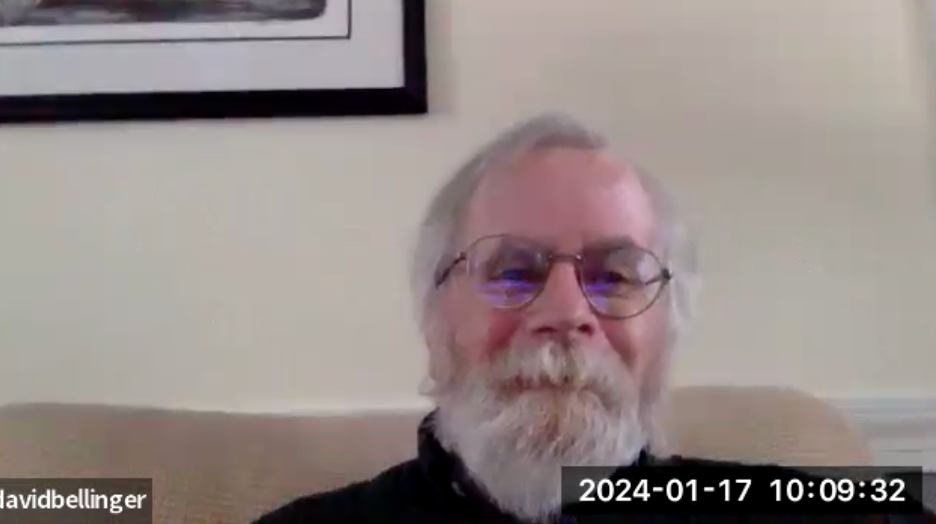
JMK: Good morning, David! Thank you for meeting with me. I’ve been following your work for so many years, and I especially appreciate the work you’ve done around organophosphate pesticides and IQ, and with the TENDR Consensus. That’s something I refer to all the time. As the parent of a child who likely died because of these kinds of exposures, I’ve always felt personally grateful to the researchers who are making it possible to push back against the production of these terrible chemicals.
DB: I’m very sorry. That gives you an extra motivation to dig down on this, I’m sure.
JMK: Yes – it has caused me to change my whole career. I hope to make a difference. I have a loose list of questions, but I just want to hear your stories.
DB: That’s cool.
JMK: So the first question is really about your background and stories. What first prompted your interest in neurodevelopmental health and environmental exposures? Was there some story from your childhood, or from your early training that got you where you are?
DB: Actually, no. When I got involved in this, there really was no field of Children’s Environmental Health (CEH). Nobody did graduate training in it. We all ended up in it more or less by historical accident. I had a PhD in developmental psychology, so I was interested in child development. And going to college and graduate school in the 1970’s, the environmental movement was really picking up some steam. I was interested but not actively involved in the work.
I was here in Boston, working at Boston University, and my funding ran out. My wife had taken a postdoc at Harvard Medical School, and that was a really great opportunity. So I was looking around Boston for jobs that could use my background. And it just so happened that Herbert Needleman was at Boston Children’s Hospital at that time. He had just published his landmark paper in the New England Journal of Medicine in 1979.
He was advertising a job for a psychologist who could help him with the new project. He had just gotten funded to do a prospective study of children’s subclinical exposure to lead. So I applied not knowing about lead or public health or environmental health. But he and I hit it off, and he ended up hiring me. That’s how I ended up in the work – and it all just clicked. I discovered that I am pretty passionate about this. I realized soon that I didn’t know enough, so I went back and got a degree in epidemiology from the Harvard School of Public Health. And then Herb left a couple years later and went to the University of Pittsburgh, so I more or less took over the studies, and I’ve been at Boston Children’s ever since.
JMK: That’s amazing! Last week I was talking with Brenda Eskanazi, and she said that you two were at a conference when you realized that you got the job that she had wanted as well.
DB: Well, she’s done awfully well. [We both laugh.]
JMK: Yes. It's really been a delight getting to know all of you. Mark Miller said something about this as well – that the field really wasn't in place and that Herb Needleman was a big influence on so many of you. He also he told me the story about how Herb was persecuted for his work by the industry.
DB: That was a very tough time. I was kind of drawn into that as well – the same people that succeeded in getting NIH to do an investigation into him also wanted an investigation into me. They wanted all that work to be investigated. It was a very stressful, upsetting time.
JMK: That’s terrible. And of course, that’s still going on with persecution and bullying of scientists.
DB: When you are doing work that threatens vested interests, when money is involved, you have to be prepared to absorb the slings and arrows. In a way, it’s excellent scientific training because you get so sensitive to the possibility that you could be challenged that you are extra careful. You don’t say anything that cannot be backed up with data.
JMK: I am remembering Sandra Steingraber talking about how Rachel Carson had to be so careful with everything because she knew that the industry would go after her. The Union of Concerned Scientists is good on the phenomenon of industry bullying scientists. And it seems fairly widespread. Do you think it ever introduces a bias among scientists to be more conservative? Jim Hansen thinks that in climate change, it's introduced a bias in the IPCC, that they are reluctant to say anything that sounds extreme, even if it's true. They are afraid to get this kind of pushback.
DB: I wouldn't be at all surprised that that's the case because once you become the target, it sucks up a lot of time and energy. Herb lost two years of his prime research years defending himself. That was one of the objects of the attack – to take him out of the picture because he was such a strong, articulate, and fearless advocate. They figured if they could sideline him, then it would make it easier. Other people might say, I don’t want to be involved in this. I will do something much less controversial.
JMK: Yes, absolutely. Lawyers can make anybody’s life unpleasant.
DB: Yes, they can. For many years, I had opportunities to get involved in litigation around lead or other chemicals. I always turned it down. I thought I would hate that kind of work in an adversarial environment where someone’s sole object was to impeach your credibility and cast doubt on your work.
I just didn’t want any part of that. Lately, I’ve discovered I do like that work. [We laugh.]
In truth, I felt a little guilty about not getting involved because industry doesn’t have trouble finding scientists that they can pay enough money to spout their side of the story. But plaintiffs do have a lot of trouble finding people for their side. There’s no academic reward for it. You don’t get promoted because you’re an expert witness – only for writing papers. You don’t get paid. I felt that I was not really putting my money where my mouth was. If I really believed in this work, I should try to implement change in the world, solve some of these problems, and bring relief to people who have been harmed by these chemicals.
JMK: I'm really grateful you did that work. And you came to enjoy expert testimony?
DB: Another thing I realized reading reports of experts on the industry side – they didn’t know as much as I did about these topics. They will write about anything, and they are smart and do their homework, but they haven’t been living a particular topic for their whole research careers. That’s another reason it was important to get involved, to make sure that the record reflected what the actual state of the knowledge was. And then, lawyers are also smart and well prepared, but they aren’t scientists. I was nervous about sitting in a chair and being attacked, but I discovered that it wasn’t that hard to parry their attacks because I knew the evidence and could justify whatever I was saying – and I could go far beyond their knowledge of the field. It left them with nowhere to go. They couldn’t ask follow-up questions because they didn’t really even know what to ask.
JMK: I bet there was a pleasure in getting to employ all the knowledge and experience you spent decades learning.
I was talking to Bruce Lanphear about this, and he said he does do expert testimony. He also tells young scientists to do it, but to stay pure: donate any money gained to avoid even the appearance of corruption. But so many scientists do just go ahead and join with industry. We see this on the Federal Advisory Committees, and especially under Trump. I don’t know how people like that sleep at night.
DB: I suppose it’s similar to defense lawyers who say that everyone is entitled to the best defense possible. Maybe I don’t buy that argument, but maybe that’s what the scientists are thinking – that it’s legitimate to raise doubts about the quality of evidence in a litigation context. I don’t know if I could justify it to myself, but obviously, people do.
JMK: I heard an otherwise very smart toxicologist say something astonishing – that he doesn’t really believe in epidemiology.
DB: A lot of toxicologists don’t.
JMK: I knew that was a thing, but it was still so surprising to me. And many are very keen on these New Approach Methodologies (NAMs), which I know others have concerns about because they don’t represent real people in real time in the same way epidemiology does – with multiple exposures and other real-world assaults. Do you have a take on NAMs?
DB: I haven’t been involved, and I haven’t followed it. In my limited understanding, the advantage of NAMs is that they are quicker and less expensive than doing a multi-year epidemiological study. But the downside is, as you say, that they are not real people and don’t mirror real-world exposure scenarios in a way that we would really want them to. So I guess I would say that some combination of methods is probably the best way to zero in on what the truth is.
JMK: That makes sense. Some of the people I really trust are saying things like that NAMs could be used to flag chemicals of concern but shouldn’t be used as evidence to approve chemicals that have been impugned by epidemiological evidence, especially where we have very good data, or where NAMs are not a good model, as with neurocognitive effects.
DB: Yes – I totally support that.
JMK: You have done so much, and you’ve worked so many years in the field. Is there one thing or a few things of which you are proudest as you look back now?
DB: I guess persevering in the face of opposition and not backing down, publishing papers that were not universally accepted, and then having that work serve as the basis for regulatory action. That has been very satisfying.
Bruce always says that the 1991 CDC lowering of the blood lead action level (BLL) from 25 to 10 µg/dL of blood was largely based on our Boston prospective study. I don’t know if he’s being too generous in that. It certainly played a part, though it was not the only reason that that action was taken.
And then in 1996, China opened its first childhood lead poisoning prevention program in Shanghai. I was invited over for the ceremonial opening of it along with two others – Paul Mushak and John Rosen. A Chinese pediatrician who organized the program had studied with John. So we were guests of the Chinese Medical Association.
They took us around to different places and gave us an audience with the Vice Minister of Health of China. We talked about the importance of removing lead from gasoline – we said China didn’t have many cars at that point, and they were just on the bubble of bursting industrialization. We said China could avoid a lot of the problems that plagued the Western industrialized countries for sixty years by addressing lead in gasoline now and protecting all future generations of Chinese children. The Vice Minister just nodded and didn’t say anything, but a couple of months later I read in the paper that China had banned lead in gasoline. That was a real accomplishment. It took 20 years in the U.S. It’s partly a difference in the system – the central government can make one decision and accomplish that goal. So if you like the end product, it’s a great system. Otherwise, it’s not. But in this case, it benefited the children of China a lot.
JMK: Do you remember the Beijing Olympics? They just said, we’ll stop driving half our cars, and they just made it so.
DB: The air cleared up dramatically.
JMK: By the way, I always start my presentations with that graph of what the lead levels were when I was a kid, 88.2% at or above 10 µg/dL, and the more recent data on that chart is 1.4 – or now it's less than one.
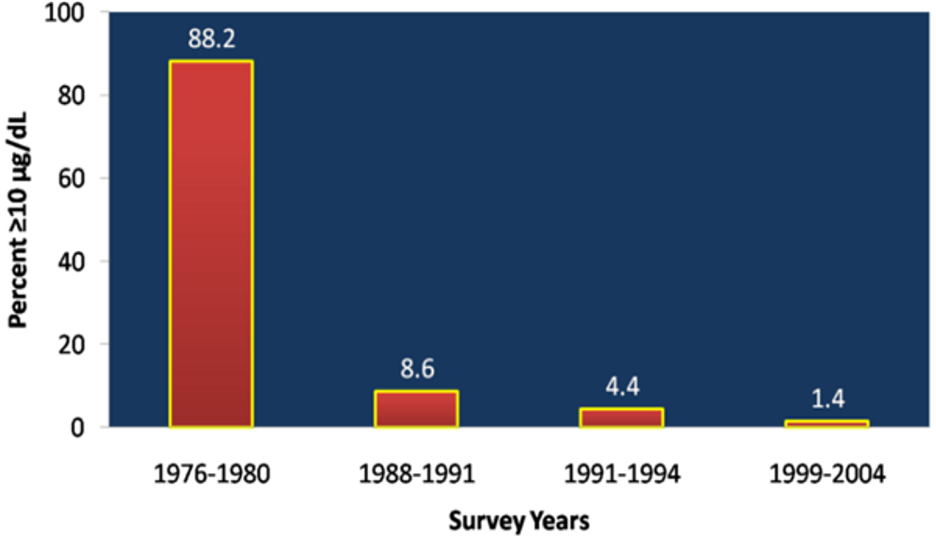
Figure 2: Percentage of children 1-5 years old in the U.S. population with elevated blood lead levels (≥ 10 μg/dL) (Jones et al. 2009).
DB: It's really a remarkable success story. But of course, that's over 40 years. Should it have taken that long? The evidence was pretty clear a long, long time ago.
JMK: Yes, absolutely. David Rosner and Gerald Markowitz write about that history in Lead Wars.
DB: They are terrific!
JMK: So you worked with children because you were at Boston Children’s Hospital.
DB: Yes – since 1979.
JMK: That’s wonderful. I think it's hard for parents to be raising children in a world where every single child is born pre-polluted. There's a lot of guilt and fear among parents, and I think some practitioners are perplexed about how to discuss these things with parents without making them feel fearful or guilty. So I wondered – when you had these conversations with parents and their children, how did you message that? How do you present a topic that is important, but also productive of anxiety?
DB: You have to give them some solutions. In the case of lead, and certainly other chemicals, there are steps that can be taken to reduce exposure. Knowledge is the key. You have to know what the sources are.
If parents don’t know whether the paint layers in their homes contain lead, they can get it tested. If it does, then they can take whatever steps – sometimes expensive ones – to reduce the exposure. They need to make sure that they are not using imported spices and imported cookware that may have heavy metal glazes. We let them know what the information is, and then they are free to do what they want with it.
But also, I would always tell parents that while the evidence is that these chemical exposures certainly don’t help children and cause some harm, there are a lot of other things they can do to foster their children’s development and brain health. In the studies, these chemicals explain a relatively small percentage of the variance in the neurodevelopmental outcomes. On a population basis, that could be very, very important, but for an individual child, there are a lot of other things that are more important that parents can do, like reading to them, taking them to museums, and giving them environmental enrichment in various ways.
I think it’s important for parents to realize that there are a lot of things that are in their power to promote optimal neurodevelopment. It’s not all bad news. Sometimes I do feel that “the sky is falling messaging” is out there. I’m not sure it’s always very productive because I think it does lead people to throw up their hands and say, “Well, there’s nothing I can do about it. It’s just the modern world. So I’m going to ignore the whole thing.” I think we have to be careful to give people some useful approaches that they can take to reduce the morbidity associated with these things.
JMK: And at the population level, we could choose to do differently, right? That's why I start with lead with nearly every presentation because, of course, we still are dealing with lead, yet in many ways, it's a huge success story. And we could do that with so many other exposures.
Over your career, you've watched rates of Autism Spectrum Disease (ASD) climb. You said that you thought the contribution of environmental chemicals was relatively little, and I assume that you're talking about IQ or behavioral outcomes. Do you have a different take on autism? I know that the diagnostic criteria have changed, but most people agree that there is a true increase. It's quite dramatic.
DB: Yes. It’s a puzzle. Certainly, a lot of studies are finding links between environmental exposures and autism. One thing that always takes me aback is that the chemicals that are linked to autism are very different in terms of their mechanism of action. And so you wouldn't expect them to produce the same behavioral phenotype, so that gives me pause. I think that there are limited numbers of ways in which children's behavior can fall outside of the norm. There are a number of conditions – like low birth weight, pre-term birth, congenital heart disease – that also produce phenotypes that have the same qualities as ASD. But I don't think the children have autism. Maybe they have the social cognition deficits. They aren’t so good at reading other people and behaving appropriately in a peer or group setting, language delay, weird behaviors. It may not be the fully stereotypical repetitive behaviors of children with ASD, but they call it a spectrum because you can lie on the mild or extreme end. There may be overlap with behavioral phenotypes with very diverse exposures.
All that said, it is very puzzling that ASD seems to have increased so much. When I was training, you really knew if you saw an autistic child – they seemed like they were from a different planet, a different species. They just did not share a lot of the fundamental commonalities that we all share in terms of our views of the world, and how to behave in it. Now that the term is applied much more loosely, I am skeptical that environmental exposures are contributing to the very severe forms of autism. I think that probably has a very different etiology. But I’m open to the idea that these exposures can cause behaviors that are part of the clinical presentation of autism. But the child may not meet a clinical diagnosis of autism.
JMK: And of course, there have been rat studies and mouse studies with ASD-like behaviors that show connections, especially to lead, PCBs, and organophosphate pesticides.
DB: I’m not quite sure what an ASD-like behavior in a rat is. But there is no question that these chemicals can alter behavior in all sorts of ways. So we will see down the road.
JMK: Yes. Well, the next question asks you to imagine if you could just single-handedly recreate US policy regulating environmental chemicals, what that would look like? And how do we change going forward to try to get to a better place?
DB: That’s an important question. Some things are happening along those lines. The movement to not regulate chemicals one at a time but rather to regulate classes is a huge advance because people refer to the current situation as whack-a-mole – one chemical gets regulated, but then the company does some minor chemical modification, and it becomes a new product. It’s still toxic, but it doesn’t come under the regulation of the predecessor. That will be a really important step.
The other thing is that we’ve had regulatory approaches that have been backwards, waiting to impose limits on chemicals after they have been on the market for decades, and we finally discover that that was a bad idea. We need to do more pre-market evaluation and require the companies to provide evidence that there are no gross adverse effects of chemicals before they are introduced. There is a big industry pushback on that of course because it increases their costs and delays their ability to bring chemicals to market. There are enough examples of unwise and hasty introductions of chemicals into the marketplace that a strong argument can be made that something needs to be done. The EU has tried to do that with REACH – though I’m not sure how successful it has been. I like the principle, and I think something along those lines makes a lot of sense.
JMK: Yes. The same toxicologist who said he didn’t believe in epidemiology also said he didn’t really like the precautionary principle. He said it was too careful. And you know, toxicologists believe that dose is everything, and of course they are not completely correct about that.
It seems to me we are going towards NAMs so as not to use rat research, not to experiment on animals. But we’ve been experimenting on our children and ourselves all along – in such a terrible way – with no control group.
DB: That’s right. In 1988 when NHANES showed that 88% of children had a BLL above 10, you really couldn’t even ask the question if 5 is bad because you couldn’t find controls. To give you an example in history, I was reviewing literature back when I first started working on lead. I found a 1972 paper that compared exposed and unexposed children. Exposed children had a BLL of 60-70 – and the unexposed group was at 38 µg/dL! They didn’t find any difference between the exposed and unexposed groups and concluded that lead is not bad even at doses of 60-70.
Ironically, the advances in limiting exposures that happened over the last 40 years made it possible to even ask the question of whether 1-2 µg/dL is bad. It’s paradoxical. The view that even low levels are bad was a product of the success of the environmental regulations.
JMK: I think we can all be grateful to you and to everyone who worked on that. At least that's one thing that not as many parents have to worry about.
So both the books I have done – the previous one, and this current one I'm working on – are really addressing the same question, which is, if we know we are destroying the climate on which all life depends, and we are poisoning our children, and there are solutions ready to hand, and we could stop a lot of this, why are we not doing it? I’ve been summarizing that as, “Why is it that we, as human beings, are being so stupid?”
DB: I guess it’s competing priorities – we like our modern conveniences that are based on chemicals. To radically reduce or eliminate a lot of exposures would require fundamental changes in all aspects of society: transportation, food production, food packaging. It’s the slippery slope that we started down. Once you get pretty far down, it’s hard to stop and get back up the hill.
You know the story of how lead got introduced as a gasoline additive is very instructive. Rosner and Markowitz talk a lot about that. Tetraethyl lead was presented as a gift from God according to the head of GM or some industry person. They said it was very important to produce automobiles that had higher performance. Back in the 20’s as the automobile taking over the country, lead seemed to solve one of the problems that was encountered.
Public Health people said at the time that it was a really bad idea, that we will discover decades from now that we were poisoning the population with this heavy metal. These objections were acknowledged but not acted upon. So these are not strictly Public Health problems – they have to be evaluated in the whole value system of a society. Our society values wealth and convenience over health. It’s as simple as that. You don’t make money by preventing health disorders. So there is not a strong economic incentive – in fact, there are a lot of disincentives to preventing these sorts of things from happening.
JMK: Yes. I am convinced the petrochemical industry is to blame. Some people also accuse medical institutions of being complicit. I don’t feel like that is true on an intentional level. But I would be really interested in your take on that question, because of course, cancers that are caused by chemicals are treated with chemicals, and pharmaceutical companies make money, and cancer keeps hospitals in business, and hospitals are now for-profit. I have always resisted that explanation myself, but do you have a take on that?
DB: I guess I look at it a little differently. I think the problem is that medicine has been focused on treatment instead of preventions largely because that’s where the money is – cures use fancy machines. Doing effective public health…. I was on my local Board of Health – and when I was running for re-election, one of the criticisms was, how come we’ve never heard about you and what the Board of Health is doing? And I said, well, when Public Health is successful, you don’t know it. There is no reason for it to be in the newspaper. And it doesn’t pay very well. That’s another factor that could lead to Public Health not being seen as a very important part of medicine. I think that’s changing, finally, but it has been very slow.
JMK: There’s very little glory in preventing a disease, right? You never know who that person is, and they can’t come back and thank you.
DB: You do it just because you know it’s right.
JMK: Well, I don't know a parent who wouldn't rather have had their child's disability or disease prevented than cured. Cure is important, too, but….
DB: Of course, it's easier to prevent something than to fix it.
JMK: And you know, from my own perspective, we always tried so hard at prevention – organic food, no pesticides, less air pollution – and it's very difficult, because you don't always know what chemicals your child is exposed to.
DB: You sure don’t – unless you test and look. It’s been a problem that a lot of the damage that’s been done by these chemicals is subclinical. If the child doesn’t look sick, it’s not going to be investigated until it’s too late.
JMK: Or even if there are. In our case, my children’s organophosphate exposure was diagnosed as asthma, even though I did not think that was right because the symptoms were very acute, came out of nowhere, and then gradually faded away. And there were no tests. Even once we knew we had been exposed, there were no tests.
DB: You have to have a physician who actually is thinking outside of the usual medical box. It shouldn’t be considered outside of the box, but it is.
JMK: Absolutely. I loved the 2012 American Academy of Pediatrics (AAP) Statement on Pesticides because it asked pediatricians to become aware of acute and chronic exposures.
Okay, so looking into your crystal ball, what do you think will be the status of children’s health in the year 2050?
DB: I never thought about that. I do think things are moving in the right direction. When I got involved, there was very little capacity to even ask these questions, and it’s only been slowly that the pace has been accelerating. So now there are many more people working in the field from diverse perspectives.
I’m not big on genetics, but one big unanswered question is what are the gene-environment (GxE) interactions that may be relevant? If some chemical is etiologically important with regard to autism, I think it’s going to be because of a GxE interaction– not just a direct effect of the chemical. We know hardly anything about what makes someone more or less vulnerable to a chemical genetically, except in a few instances. But I don’t think it’s a very detailed picture. I would assume that over the next 25 years, a lot of progress may be made in that regard with all the cheap new genome sequencing – looking at exomes, etc. I think that will become an area of more work.
JMK: I find the ASD studies on fraternal and identical twins very interesting, trying to figure out how much of that effect is likely to be shared uterine environment vs. shared genetics.
DB: Exactly. People assume it’s all shared genetics, but that’s only half the story. That’s a very important thing.
JMK: I think people assume a disproportionate impact of genetics because when you go to the physician’s office, you give a health history. You rarely give an environmental health history.
DB: No – not at all. I don’t think they even know what questions to ask.
JMK: The National Environmental Education Foundation (NEEF) has one that’s very good – that was my MPH internship, taking environmental health histories and information to 210 different medical offices. Leyla McCurdy, who is in my American Public Health Association (APHA) CEH group, is among those who helped to develop that. It asks about parents’ occupational history, pesticide use inside and outside the home. Those kinds of questions have two purposes. One is to alert the clinician if there might have been exposure, but the other is to educate the parents. I think if that became part of every routine visit, things might change. People trust their family doctors, and so I feel that is an important route for education of parents. I recently did have one functional medicine doctor myself who included environmental health history questions.
DB: Of course, the problem now is most doctors’ visits are 7 minutes. There is not a lot of time to do very much in-depth inquiry along those lines, though maybe there is a way to do it outside of the visit, as long as the doctor reviews the information – it doesn’t just go into some computer.
JMK: I’m sure you’ve seen so many changes in the practice over your long career.
DB: Yes, and most of them are not good.
JMK: I remember talking to a lot of doctors when I was deciding between med school and grad school, and a lot of them predicted that medicine would not be the same field in 30 years, which is now, because of the interference of insurance companies and large practices.
DB: My wife is a psychiatrist in private practice, and she just spends a ridiculous amount of time struggling with insurance companies trying to get the ability to provide more sessions for this or that patient beyond what their plan provides. It’s just crazy how much time she spends, and she’s usually not even talking to another psychiatrist – it’s a nurse or something, not to disparage nurses. But they are working for the insurance company, and their job is basically to deny as much as they can.
My father was a surgeon back in the golden years of medicine, and doctors were gods. When my wife talked about going to medical school – this was even back in the 80s – he would try to discourage her. He said medicine is not what it used to be.
JMK: Yes – that is very true. It’s still a very noble profession and one of the best things you can do with your life. But I think the pressures are horrendous, and private practitioners have to run a business as well. So I think that pushes physicians into these large practices, where they are told what they can do, including their prescribing habits, time spent with patients, and all kinds of other things.
DB: Mostly they are told what they can’t do. [We laugh.] The practices probably have as many administrators who work on insurance billing as physicians and nurse practitioners.
JMK: It’s terrible, and that’s another thing Europe has over us, and one reason why their healthcare outcomes are so much better for so much less money. But I know I'm preaching to the choir on that.
I'm using a snowball sampling method here. And I wondered if there was anyone else that you thought I should talk to, either other practitioners or researchers, or even parents or activists.
DB: This is partly triggered by something I read in the New York Times this morning. Neil Gorsuch’s mother was Anne Gorsuch, and she was the EPA administrator under Reagan – and she was just awful. Her mission was to cut regulations. Joel Schwartz worked for EPA at the time, and he’s got some great stories. Essentially, he got her fired. There were some shenanigans going on in the office, and he wrote a memo outlining the results of some meeting – and the memo was the smoking gun. He would be really interesting to talk to as a matter of history about the regulation of lead in gasoline.
The reason it came up is that apparently there is some case before the Supreme Court about the ability of regulatory agencies to set rules, the degree to which they can be autonomous in setting rules, and the degree to which Congress has to say that they can set rules, and Gorsuch is still apparently mad about his mother being fired. And so the concern is that he is going to come down on the side of reducing EPA’s power to regulate. [And this has since occurred.] It’s a big case, and Joel might be interesting.
Have you talked to people who are working in the community?
JMK: I have some contacts. For the book project, I haven't gotten to that as much since I am interviewing researchers first. I do want to reach out to some of the activist organizations and try to get some other vocal parents. I've been in on conversations with the Childhood Cancer Prevention Initiative (CCPI). But if you have ideas, I would love to hear them.
DB: I work with a group in Oklahoma – the Tar Creek superfund site, which was a big lead and zinc mining area until a few decades ago. The companies extracted as much heavy metal as they could and then just left. They left big piles of contaminated tailings, which were used for sandboxes. The water got contaminated because the mines filled up with water after the pumps were turned off, and they got very acidic – so they were leaching out heavy metals. All the water bodies in the area were contaminated. I could put you in touch with a woman named Rebecca. And then there is a group out in Kellogg, Idaho. There was a big lead smelter there that had a fire, and the emissions equipment was damaged and not repaired, which resulted in 98% of the children having a BLL above 45 in the Silver Valley. Her name is Barbara Miller – if you do want to connect with some of these local groups, I could put you in touch with a couple.
JMK: I would really be grateful for that.
DB: I will send you their contact information.
JMK: For the last question, I like to turn the tables and ask if you have any questions about my experience or the project.
DB: Well, I will be very interested to see what you put together. I think I would like to hear other people’s stories about how they got involved.
JMK: I do feel like the stories have been so rich. It’s inspiring at a time when very few people are doing something to help protect children and prevent these diseases, that some of you – very smart, dedicated, talented people – have been. Especially for those who have suffered the effects, it's heartening that some people have been working on this all along. I hope you will be interested to read blogs by Mark, Bruce, Dick, and I hope soon, Brenda. And I hope you will feel free to share the blog once it is out.
Actually, Mark Miller said that I should do a history of the field, and I said, okay – maybe for book number three. He’s been very generous with his time, and he had lots of history. He said he was interested in getting these stories out. He said that a lot of you in that first cohort are not getting any younger – and that you just lost Melanie Marty.
DB: Yes.
JMK: He had just been at the funeral and felt it was important to capture these stories. Anyway, it has been such a pleasure getting to know you a little bit.
DB: I would love to see the book.
JMK: Thanks so much!